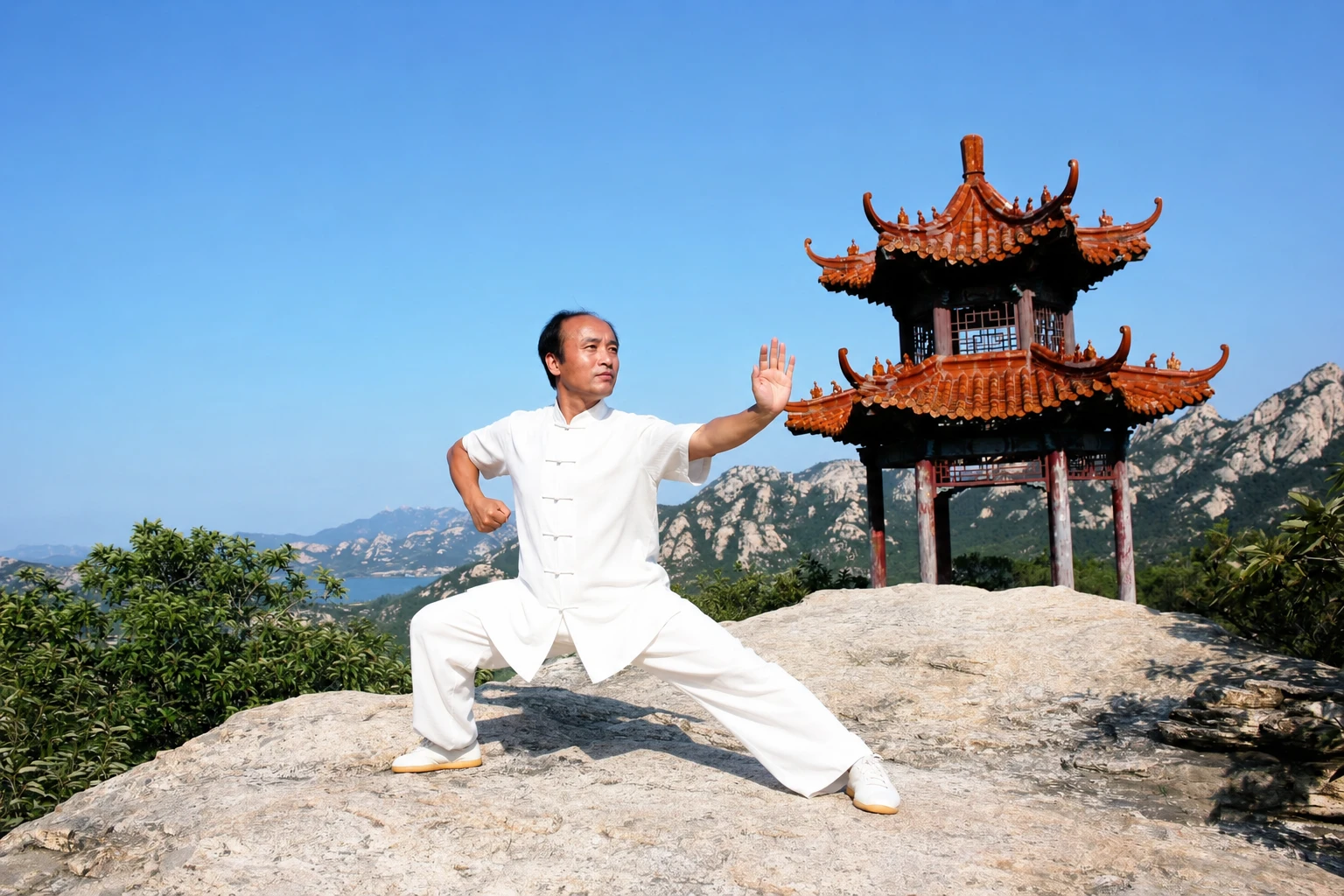
Southern Fist
Strengthen the lower body, refine inch power, practice close-range self-defense, and experience the characteristics of traditional Lingnan martial arts.
Contact
Detailed Introduction
Nanquan is a traditional Chinese martial artGeneral term for southern fist stylesIt is also one of the four major mainstream martial arts systems in China (Southern Fist, Northern Leg, Tai Chi, and Xingyi). Unlike the Northern martial arts style, which features wide and expansive movements, long-range stances, and jumping and leaping, Southern Fist focuses onSteady steps with fierce momentum, powerful short strikes, close-quarters combat, using skill to overcome strength。
Southern Fist is popular in the regions south of the Yangtze River in China, with Guangdong and Fujian as its core birthplaces, and is the central inheritance of the Southern Shaolin martial arts system. As a national-level traditional martial arts competition item and intangible cultural heritage martial arts culture, Southern Fist features compact movements, full power generation, a profound momentum, and extremely strong practical combat effectiveness. It is the classic Chinese boxing style most easily recognized by overseas martial arts enthusiasts and possesses the most aesthetic beauty of Eastern power.
I. The Origin and Thousand-Year Development History of Southern Fist
1. Early Emergence: Foundation in the Jin and Tang Dynasties, Formation in the Song and Yuan Dynasties
The martial arts prototype of Southern Fist can be traced back as early as the Jin and Tang dynasties. During this period, the practice of martial arts was prevalent among the people in the Jiangnan region. Combined with the geographical characteristics of the southern mountains and water towns, a unique boxing style featuring short-range offense and defense and a stable lower stance gradually formed. By the Song and Yuan dynasties, the martial arts trend among the people in the south was flourishing, and various types of self-defense and military camp boxing techniques were gradually standardized, laying the foundation for the maturity of the Southern Fist system in the Ming Dynasty.
2. Ming Dynasty Zenith: The Mature System Forged in Anti-Japanese Combat
Southern fist in the Ming DynastyThe period of formalization and full flourishing.A critical period. The southeastern coastal regions suffered from frequent pirate raids. Famous generals such as Qi Jiguang and Yu Dayou reorganized southern martial arts, combining Southern Shaolin boxing techniques with practical combat skills from folk traditions to optimize a southern boxing system suited for close-quarters combat and complex terrains. This elevated southern boxing from a collection of folk styles to a formalized, practical martial art, which was recorded in martial arts classics.
3. Diversification in the Qing Dynasty: Numerous Schools, Flourishing Styles
After the Qing Dynasty, southern boxing became widely popular in Guangdong and Fujian, branching into numerous classic schools, forming a vast and diverse matrix of southern martial arts. The five major famous boxing styles of Guangdong (Hong, Liu, Cai, Li, Mo), Wing Chun, Choy Li Fut, Fujian Shaolin boxing, White Crane boxing, and others all took shape. Southern boxing officially became an independent and complete major school within Chinese martial arts.
4. Modern Spread: Competitive and Health-Promoting Boxing for Global Popularity
Since modern times, Southern Fist has shed its attributes of martial arts killing and combat, becoming standardized and normalized, evolving into a core event in martial arts competitions, a popular fitness method, and a leading style for overseas cultural dissemination. With its high recognizability, strong sense of power, aesthetically pleasing form, and ease of learning and practicality, it has become popular in the global martial arts community.
II. Core Style of Southern Boxing: The Essential Difference Between Southern Boxing and Northern Legs
1. Classic Martial Arts Maxim: Southern Boxing is Stable, Northern Legs are Agile
Chinese martial arts have had since ancient times"Southern fist, Northern leg"A classic generalization that precisely distinguishes the core differences between Northern and Southern martial arts: Northern martial arts emphasize leg techniques, jumping, expansive movements, and graceful, flowing body mechanics; Southern boxing emphasizes hand techniques, stance training, short-range power, and stability, with fewer jumps and more rooted stances, feet stable as mountains.
2. Five core characteristics of Southern fist
- Stable footwork, solid lower foundation: Low horse stance, rooted to the ground, rarely leaping into the air, center of gravity firm and difficult to dislodge.
- Dense hand techniques, compact close-range combat: Short bridge arms, dense techniques, close-quarters offense and defense, excelling in rapid, continuous strikes at close range.
- Fierce power generation, penetrating short-range force: Focuses on storing energy, explosive bursts, and short-range power delivery, with power sinking into the dantian and robust, vigorous force.
- Tight defensive structure, offense and defense integrated.The arm guard is comprehensive with no gaps, combining defense with offense, where defense and attack occur simultaneously.
- The momentum is powerful, unifying internal and external aspects.Both form and spirit are present, with vocalization enhancing force, using breath to drive power, and maintaining high momentum.
III. Mainstream Southern Fist Schools and Representative Boxing Styles
1. Five great master fist styles of Guangdong (traditional orthodox Southern fist)
Guangdong is the core inheritance region for Southern Fist. The five major boxing styles—Hung, Lau, Choy, Lee, and Mok—are collectively known as the five famous boxing styles of Lingnan, forming the foundational system of traditional Southern Fist.
- Hung GarThe largest school of Southern Fist, characterized by its vigorous and powerful style, stable stances, and deep strength, with grand and imposing techniques. Representative routines include the Gong Zi Fu Hu Quan (Worker's Character Tiger-Taming Fist) and Hu He Shuang Xing Quan (Tiger and Crane Double Form Fist).
- Lau GarFeaturing agile hand techniques, varied footwork, flexible offense and defense, and excelling in close-quarters combat.
- Choy GarWith compact techniques and rapid consecutive strikes, it overcomes slowness with speed and achieves victory through skill.
- Lei Gar: Combining hardness with softness, and long with short, the force is penetrating and highly practical
- Mo Gar: Simple and solid, focusing on practical combat with few flashy movements, and a stable stance
2. Southern fist styles with immense popularity at home and abroad
- Wing Chun: One of the most famous Southern Chinese martial arts, featuring Siu Nim Tao, Chum Kiu, and Biu Jee, emphasizing close-range combat, centerline defense and control, suitable for those with a smaller build
- Choy Li Fut: Integrating the strengths of three major boxing styles, with expansive movements, a balance of hardness and softness, a rich variety of forms, and strong visual appeal
- White Crane: A classic Southern Chinese martial art from Fujian, imitating the white crane's posture, light and elegant, overcoming hardness with softness, with clear distinction between movement and stillness
- Southern Shaolin: Authentic and traditional, with a solid foundation, emphasizing stance training, consolidated force, and practical combat skills
IV. Core Skill System of Southern Chinese Martial Arts: Stance, Hand Techniques, Footwork, and Force Methods
1. Foundation Core: Southern Chinese Martial Arts Stance Training
Southern fist has "Practice stance before fistThe 'iron rule' of Nanquan is that stance work is the foundation of all power and body movement. The core stances—horse stance, bow stance, empty stance, and crouching stance—are stable and solid. Long-term practice can stabilize the lower body, strengthen lower limb force, and train core stability, making the body as steady as a mountain.
2. Core Hand Techniques: Bridge Hands as the Soul
Southern fist emphasizesBridge handsThe core involves short, fast, and highly variable arm attack and defense trajectories. Common basic techniques include thrust, chop, lift, block, parry, sweep, press, and intercept. The hands alternate in rapid succession, forming a seamless, all-around close-quarters attack and defense system.
3. Unique Power Methods: Inch Power and Sinking Power
Unlike the long-range power generation of Northern styles, Nanquan focuses onShort, explosive power. The power is fully gathered, explosively released in an instant, and retracted immediately. The force is solid and grounded, not floating, combining penetrating power with stability. This is the core essence of Nanquan for practical combat and self-defense.
V. The Three Core Values of Nanquan: Combat, Fitness, and Shaping
1. Practical Combat and Self-Defense: Close-range striking for efficient self-protection.
Southern fist is in traditional martial artsHighly practical in combatExternal family boxing techniques. Adapted for confined spaces and close-quarters combat, it does not rely on height, weight, or large venues. It focuses on rapid close-range counterattacks, close-body subjugation, and tight defense, using skill to overcome brute force. It is highly suitable for daily street self-defense.
2. Strengthening the body: Reinforcing the core and stabilizing posture
Southern Fist involves continuous core tightening, solid horse stances, and coordinated hand-foot movements, effectively exercising the waist and abdominal core, lower limb strength, limb coordination, and body control. Long-term practice can improve issues such as loose posture, weak core, unstable stance, and poor physical fitness, with outstanding results in shaping and strengthening the body.
3. Cultivating character and Qi: Forging a resolute and composed temperament
Southern Fist emphasizes correct form, sinking Qi, and focused spirit, requiring concentration, determination, and composure during practice. Long-term cultivation can eliminate a loose and impetuous state, fostering a temperament of resilience, self-discipline, steadiness, and decisiveness, offering dual values of physical strengthening and mental cultivation.
VI. Who is Southern Fist suitable for?
- Overseas martial arts beginners with zero foundation: Clear structure, standardized movements, high recognizability, beginner-friendly
- Practitioners with a small stature and relatively weaker strengthDoes not rely on height or brute force, focusing on technique and short power
- For those who want to shape their body, strengthen their core, and improve postureSolid stance training, significant effects on body shaping and fitness
- For those pursuing close-quarters combat and daily self-defenseClose-range short strikes, efficient offense and defense, highly practical
- Enthusiasts who like a vigorous and powerful martial arts style with strong momentumDistinctive style, full of a sense of power
VII. Key Points and Practice Taboos for Beginners in Southern Fist
1. Core formulas for beginner introduction
Core Principles for Beginners in Nan Quan (Southern Fist):First establish the stance, then practice hand techniques; first seek stability, then seek power.Beginners should not rush to practice speed or explosive power. Prioritize mastering the horse stance and foundational posture, correcting body alignment, and standardizing hand technique trajectories. Achieve stable steps, an upright body, and precise hand movements. Once the foundation is solid, gradually practice sinking power, inch power, and overall momentum.
2. Precautions for practice
- Lower the horse stance moderately; do not force leg pressing or allow the lower back to sag or the back to hunch, protecting the knees and lumbar spine.
- Develop power progressively; beginners should avoid rigid brute force or holding their breath while exerting force.
- Maintain steady breathing; use breath to drive power and coordinate naturally, without erratic breathing patterns.
- Keep movements compact and structured, not loose or floating, preserving the characteristic stability of Nan Quan.
- Consistently practicing stance work for short periods daily is the fastest way to advance.
VIII. The Contemporary Value and International Influence of Southern Fist
Southern Fist, as a representative of Chinese Southern martial arts culture, carries a thousand years of martial arts wisdom from Lingnan, the Zen-martial culture of Southern Shaolin, and the coastal folk spirit of martial arts practice. Today's Southern Fist is not only a core event in professional martial arts competitions but also a globally popular martial art for fitness, body shaping, and self-defense.
Because of itsUnique style, strong sense of power, aesthetically pleasing form, practical and easy to learnIn Europe, America, Southeast Asia, and Australia, Nanquan is extremely popular in overseas martial arts schools. It serves as a core window for foreigners to understand the differences between Northern and Southern Chinese martial arts and to experience the robust aesthetic of Eastern martial arts.
Northern fist is renowned for its leg techniques, while Southern fist establishes itself through its stances. Southern fist lacks the flashy, airborne maneuvers, yet possesses the most solid foundation, the most composed aura, and the most practical combat wisdom. Every move and form fully demonstrates the unique charm of Southern martial arts: 'stability, groundedness, power, and ingenuity.'
Practicing Nanquan trains solid muscles and bones, fierce hand techniques, and a steady lower body, cultivating the Chinese philosophy of being down-to-earth, resolute and courageous, and seeking victory through stability. This is the Eastern martial arts power of Nanquan that has spanned thousands of years and become popular around the world.