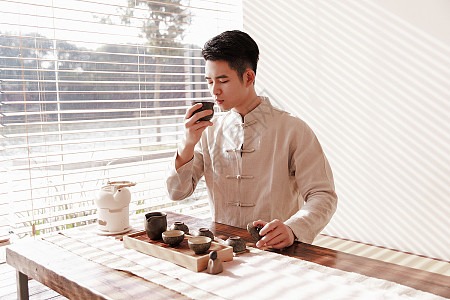
Tea Ceremony
Learn tea brewing etiquette and taste various fine teas, quietly experiencing the traditional Chinese tea culture of hospitality.
Contact
Detailed Introduction
When you hold a warm tea cup, watch the emerald green tea leaves slowly unfurl in the hot water, and inhale a wisp of delicate tea fragrance drifting from the rim of the cup — you are experiencing not only one of the world's oldest beverages, but also a philosophy of life that has threaded through thousands of years of Chinese civilization. For the Chinese, tea is far more than just a thirst-quencher. It is the daily companion in the seven fundamental necessities of life — "firewood, rice, oil, salt, sauce, vinegar, and tea" — and also a spiritual anchor in the realm of "guqin, Go, calligraphy, painting, poetry, wine, and tea." Chinese tea ceremony, or Cha Dao, integrates the Confucian ideal of harmony, the Taoist principle of naturalness, and the Buddhist pursuit of Zen tranquility. Within a single teapot and cup, it distills the Eastern world's ultimate pursuit of life's aesthetics. This article, written specifically for friends overseas, will guide you systematically into the world of Chinese tea ceremony.
I. Tea Ceremony in China: A Leaf, Five Thousand Years of Civilization
1. Shennong Tastes a Hundred Herbs: The Ancient Legend of Tea
The history of Chinese tea drinking dates back five thousand years to ancient times. Legend has it that Yan Emperor Shennong, in his quest to heal the sick, personally tasted numerous herbs. One day, he encountered seventy-two poisons and collapsed under a tree. By chance, a few leaves drifted down beside him. Shennong picked them up, chewed them, and instantly felt a refreshing sweetness and a gradual easing of the toxins — this miraculous leaf was tea. Though this beautiful legend cannot be verified, it illustrates tea's earliest role in Chinese culture: it was nature's benevolent medicine, a detoxifying herb bestowed upon humanity by heaven.
2. From Medicine to Beverage: The Millennial Evolution of Tea Culture
Tea's transition from a medicinal substance to a daily beverage was a lengthy historical process. During the Shang and Zhou dynasties, the Bashu region already presented tea as a tribute; by the Han Dynasty, there were clear records of tea trade; in the Tang Dynasty, "Sage of Tea" Lu Yu wrote "The Classic of Tea," the world's first monograph on tea. It systematically summarized all knowledge of tea cultivation, processing, brewing, and drinking, marking the formal formation of Chinese tea culture. Thereafter, tea spread to the world along the Silk Road and the Ancient Tea Horse Road — the Japanese word for tea, "cha," and the English word "Tea" both originate from the Chinese pronunciation of tea. A single, small tea leaf reshaped the entire world's beverage map.
3. Daily Tea and Ritual Tea: Two Levels of the Tea World
In the lives of the Chinese, tea exists simultaneously on two levels. The first level is the everyday tea of "firewood, rice, oil, salt, sauce, vinegar, and tea" — brewing a cup of green tea to refresh before work, serving complimentary tea to guests in a restaurant, or casually steeping a pot of oolong when old friends visit. This level of tea is casual, effortless, and woven into daily life. The second level is the ritual tea of "guqin, Go, calligraphy, painting, poetry, wine, and tea" — setting up a dedicated tea space, selecting fine tea ware, meticulously brewing with the Gongfu tea method, and savoring quietly with a few kindred spirits. This level of tea is focused, refined, and transcends the everyday. The "tea ceremony" often referred to by the Chinese more directly points to the latter — but the former is equally the fertile soil of tea culture. In China, tea ceremony is not removed from the mundane world; it merely infuses daily life with a dose of focus and ritual.
II. The Six Major Categories of Chinese Tea: A World of Flavors in a Single Cup
China is the original home of the tea plant and the country with the richest diversity of tea varieties. Based on differences in processing techniques and fermentation levels, Chinese tea is classified into six basic categories. Understanding these categories is the first map to entering the world of Chinese tea.
1. Green Tea — Unfermented, the Taste of Spring
Green tea is China's oldest and most abundantly produced tea category. After picking, the fresh leaves are immediately subjected to high-temperature fixation to halt enzymatic activity, preserving the tea's most original natural substances and its emerald-green color. The aroma of green tea is fresh and brisk, and its taste is mellow and sweet aftertaste, as if capturing the essence of an entire spring within the tea leaves. Representative famous teas include:
- Longjing (Hangzhou, Zhejiang): Flat and smooth, green in color with a rich fragrance, ranking first among China's top ten famous teas.
- Biluochun (Suzhou, Jiangsu): Curled like a snail, with visible white pekoe, blending floral and fruity notes.
- Maofeng (Huangshan, Anhui): Sharp and pointed like a sparrow's tongue, with a delicate, cool fragrance.
Green tea is best brewed with water at 75-85°C; water that is too hot will scald the leaves and make the brew bitter. Brewing in a glass cup is most convenient for observing the graceful unfurling of the green tea leaves in water.
2. White Tea — Light Fermentation, The Taste of Nature in Simplicity
White tea has the simplest production process among all tea types — it is naturally withered after picking and then slowly dried. The near-zero processing preserves the tea leaves' most authentic form and flavor. Fresh white tea is sweet and elegant; after being stored for several years, it transforms to develop a mellow honey aroma and medicinal fragrance, earning the reputation of 'one-year tea, three-year medicine, seven-year treasure'. Representative famous teas include Silver Needle (Fuding, Fujian) and White Peony (Zhenghe, Fujian). The optimal brewing temperature for white tea is 85-90°C; it is highly resilient to multiple infusions.
3. Yellow Tea — Light Fermentation, A Rare and Mellow Treasure
Yellow tea adds a 'sealed yellowing' process to the green tea production method, allowing the leaves to undergo slight fermentation in a hot and humid environment. Yellow tea production is scarce and the most niche among the six major tea types. Its aroma is fresh and pleasant, its taste is sweet and mellow without bitterness, and its liquor color is bright apricot-yellow. Representative famous teas include Junshan Silver Needle (Yueyang, Hunan) and Mengding Yellow Bud (Ya'an, Sichuan).
4. Blue Tea (Oolong Tea) — Semi-Fermentation, A World of Ever-Changing Aromas
Oolong tea is the most complex in process and the most rich and varied in flavor among the six major tea types. It lies between green tea (unfermented) and black tea (fully fermented), with a fermentation degree ranging from 15% to 70%. Oolong tea's most captivating feature is its rich natural floral and fruity aroma — Tieguanyin's orchid fragrance, Phoenix Dancong's honey orchid and duck shit aroma, and Wuyi Rock Tea's rock bone and floral fragrance are all olfactory surprises bestowed by nature. Representative famous teas include:
- Tieguanyin (Anxi, Fujian):With a lingering melody, seven brews still have fragrance
- Da Hong Pao (Wuyishan, Fujian):Distinct rock rhyme, bold and mellow, known as the 'King of Teas'
- Phoenix Dancong (Chaozhou, Guangdong)The floral aroma is rich and varied, with each tea tree possessing a unique fragrance.
Oolong tea is the protagonist of 'Gongfu' brewing, requiring boiling water (100°C) to brew, using a Yixing clay teapot or gaiwan as the vessel, and sipping from small cups to fully appreciate the changes in aroma and flavor with each infusion.
5. Black Tea — Fully fermented, the sweet and mellow taste that warms the world.
Black tea is China's most internationalized tea category and also the most consumed tea globally. The full fermentation process oxidizes tea polyphenols into theaflavins and thearubigins, forming the characteristic red liquor, red leaves, and sweet, mellow taste of black tea. The drinking methods of Chinese black tea differ greatly from Western black tea — Chinese people primarily drink it plain, without adding sugar or milk, focusing on savoring the honey-sweet and floral-fruity aroma of the tea leaves themselves. Representative famous teas include:
- Lapsang Souchong (Wuyishan, Fujian)The originator of world black tea, traditionally processed with pine smoke, carrying a unique smoky longan aroma.
- Jin Jun Mei (Wuyishan, Fujian)Made from single buds, it has a rich honey fragrance, a golden liquor color, and is a rising star among black teas.
- Keemun Black Tea (Qimen, Anhui)One of the world's three high-aroma black teas, famous for its 'Keemun aroma,' reminiscent of flowers, honey, and fruit.
6. Dark Tea — Post-fermented, the aged aroma shaped by time.
Dark tea is the only tea category that undergoes post-fermentation by microorganisms. Under suitable conditions, it can be stored for a long time, becoming more fragrant with age. Pu'er tea (Yunnan) is the most renowned variety among dark teas, divided into raw Pu'er and ripe Pu'er — raw Pu'er undergoes natural aging, with its flavor continuously transforming over time; ripe Pu'er is fermented through artificial pile fermentation, resulting in a smooth and mellow taste. Additionally, Hunan Anhua dark tea, Guangxi Liubao tea, and Sichuan Tibetan tea are also important categories within dark tea. Dark tea is often circulated in compressed forms (tea cakes, brick tea, bowl-shaped tea), requires boiling water (100°C) for brewing, has extremely high steeping endurance, and retains its flavor even after more than ten infusions.
III. The Core Utensils of Chinese Tea Ceremony: The Aesthetic World within Tea Ware
1. Teapot: The Protagonist on the Tea Table
- Zisha Teapot (Yixing, Jiangsu): The representative of Chinese teapots, renowned for its unique dual-pore structure, which can absorb tea fragrance, breathe, and retain heat. After prolonged use, the accumulated tea fragrance inside the pot can make even boiling water poured into an empty pot carry a tea flavor. It emphasizes "one pot for one tea," with different pots used for different tea types.
- Gaiwan: Consists of a lid, a saucer, and a bowl, also known as the "Three Talents Bowl," symbolizing the unity of heaven, earth, and humanity. The lidded bowl pours tea quickly, making it easy to appreciate the aroma and observe the leaves, and is particularly suitable for oolong tea and scented tea.
2. Tasting Cup: The Final Stage of the Tea Infusion
- Aroma Cup & Tasting Cup: The cup set commonly used in Gongfu tea, where the slender aroma cup is used to gather the tea fragrance, and the wide-mouthed tasting cup is used for drinking the tea infusion.
- Ruochen Cup: The small porcelain cups used in Chaozhou Gongfu tea, as small as walnuts, to be drunk in one sip, leaving the fragrance lingering at the bottom of the cup.
3. Tea Ceremony Accessories: Mastery Lies in the Details
- Tea Tray (Tea Boat): Holds tea ware, collects wastewater
- Tea Scoop: Used to measure tea leaves from the tea caddy
- Tea Tongs: Grips tea cups for hygienic handling
- Tea Towel: Wipes water stains from the base of tea ware, keeping the tea mat tidy
- Fairness Pitcher (Sharing Pitcher): First pours tea from the teapot into a fairness pitcher, then distributes it into each tasting cup, ensuring the concentration is consistent for every guest
IV. Gongfu Tea Art: The Way to Brew a Perfect Pot of Tea
"Gongfu Tea" is a traditional method of brewing tea originating from Southern Fujian and the Chaoshan region of Guangdong. It is also the most ceremonial and visually engaging brewing technique in Chinese tea culture. A complete Gongfu tea brewing session typically includes the following key steps:
1. Preparing the Utensils: Setting the Stage for the Tea Ceremony
Arrange the teapot, gaiwan (lidded bowl), tasting cups, and aroma cups neatly in sequence on the tea tray. The tea setup emphasizes balance and negative space, leaving ample room for operation between utensils, creating an overall atmosphere of serene elegance.
2. Warming the Pot and Cups: Awakening the Tea Ware with Heat
Pour boiling water over the teapot and tea cups. This serves both to clean the utensils and, more importantly, to raise their temperature. Cold tea ware would lower the brewing water temperature, affecting the release of the tea's aroma. The focus and composure required for this step are also part of the tea brewer's process of calming the mind.
3. Placing the Tea in the Utensil: Appreciating the Tea's Aroma and Form
Use a tea scoop to take the tea leaves from the tea caddy and place them in a tea presentation vessel (chahe, or tea tasting plate) for guests to admire the dry tea's shape, color, and aroma. This step is called "appreciating the tea" and is the first aesthetic experience in tea tasting.
4. Rinsing and Awakening the Tea: Stirring the Slumbering Leaves
Pour boiling water into the teapot and quickly pour it out. This first infusion is not drunk; it is called "rinsing the tea" or "awakening the tea." Its purpose is to allow the tightly rolled tea leaves to unfurl, awakening their aroma and flavor while also rinsing away fine dust from their surface.
5. High Pouring: The Passionate Collision of Water and Tea
Lift the teapot high and pour, allowing the water to form a vortex within the pot, agitating the tea leaves. The high pour allows the air in the water to fully infuse, stimulating the tea's aroma. After filling the pot, skim off any foam, then quickly cover the lid.
6. Dousing the Pot for Warmth and Guan Gong Patrolling the City: Precise Pouring and Fair Distribution of Tea
Pour boiling water over the body of the teapot to maintain the internal temperature, encouraging the full release of the tea's fragrance. When pouring, transfer the tea liquor into a fairness pitcher, then use the "Guan Gong Patrolling the City" technique—moving the pitcher back and forth above the tasting cups—to evenly distribute the tea, ensuring each cup has the same concentration and temperature.
7. Tasting: Three Sips per Cup to Capture the Tea's Essence
Tasting tea is not about gulping it down to quench thirst. Gongfu tea emphasizes sipping a cup slowly in three parts—"the first sip to taste, the second to drink, the third to savor." First, observe the liquor's color, then inhale the aroma, and finally take a small sip, letting the tea linger in the mouth to appreciate its sweetness, smoothness, aftertaste, and lingering resonance. After swallowing, the cold fragrance (cup bottom aroma) at the base of the tasting cup is also worth a careful sniff and appreciation.
V. The Spiritual Essence of the Tea Ceremony: Understanding Eastern Philosophy Through a Cup of Tea
1. Harmony — Seeking Harmony Through Tea, All Things Coexist
"Harmony" is the core spirit of Chinese tea ceremony, originating from the Confucian doctrine of the mean. When brewing tea, the harmony between water and fire, and the coordination between tea utensils, embody the harmony between humans and nature; offering tea to guests and making friends over tea embody the harmony between people. With a cup of tea in hand, one finds peace of mind and lets go of all worries. At the tea table, regardless of wealth or status, sitting down creates a bond over a cup of tea.
2. Tranquility — Seeking stillness through tea, looking inward
Taoist philosophy endows the Chinese tea ceremony with the pursuit of "tranquility." Every action in the brewing process requires focus and calm — gently picking up and putting down, neither hurried nor slow. As the tea leaves unfurl in the pot and the fragrance drifts through the air, everything is accomplished in quietude. Through brewing and tasting tea, one can temporarily withdraw from the hustle and bustle and return to inner peace. This is akin to the concept of mindfulness meditation — the tea ceremony itself is a form of dynamic meditation.
3. Purity — Seeking clarity through tea, removing impurities to preserve authenticity
The taste of tea is pure — not turbid, not stimulating, not cloyingly sweet; the space of the tea ceremony is pure — the tea table is tidy, the utensils are simple, and the fragrance is clean; the heart of the tea practitioner should also be pure — free from distracting thoughts, free from utilitarianism, and pure in treating others. A cup of pure tea washes away not only the stale taste in the mouth but also the dust and grime of the soul.
4. Authenticity — Seeking truth through tea, returning to simplicity and originality
True tea, true water, true fire, true utensils, true feelings, true intention — these "Six Trues" represent the Chinese tea ceremony's pursuit of "authenticity." No deceit, no artificiality, seeking the true flavor of tea, and returning to the authentic state of life. In the world of tea, there is no need for pretense or performance; you only need to be yourself.
VI. Social Etiquette of Chinese Tea Ceremony: The Warm Humanity of Offering Tea to Guests
1. Pour tea seven-tenths full, leaving three-tenths for human sentiment
In China, when serving tea to guests, the cup is only filled seven-tenths full, leaving three-tenths of space. This is partly to prevent scalding hands and make it easy to hold, and partly as a metaphor for "leaving room in your actions and maintaining moderation in your conduct." If the host pours the tea to the brim, it may be seen as inconsiderate. In contrast, wine should be poured full to show enthusiasm—this is the wisdom behind the Chinese folk saying "tea seven, rice eight, wine full cup."
2. Knocking fingers to thank for tea: a silent gesture of gratitude
In Guangdong and Fujian regions, when someone pours tea for you, you tap the table three times with your index and middle fingers together to say "thank you." This custom originates from a story about Emperor Qiaolong of the Qing Dynasty, who used finger-knocking instead of kowtowing to express gratitude during a private tour. Today, it has evolved into a common etiquette for showing thanks at the tea table.
3. Filling the tea cup signals the end of the visit?
In some traditional customs, if the host silently refills your cup to the brim at the end of a tea gathering without continuing the conversation, it may be a subtle way of saying "today's tea gathering ends here." However, this custom is rarely formally observed nowadays; in most cases, gatherings are naturally concluded through conversation.
Chinese tea ceremony is, ultimately, a lifestyle attitude. It doesn't require you to become a tea expert, own expensive tea ware, or memorize complex brewing steps. It simply invites you to set aside fifteen minutes in your busy day—boil a pot of water, brew a cup of tea, sit down, think of nothing, and just quietly drink this cup of tea.
Ancient Chinese people said: "Tea and Zen are of one flavor." The world within a cup of tea and the wisdom gained from meditating on Zen are actually the same thing—living in the present moment and being aware of the now. The next time you hold a cup of tea, allow yourself to immerse in the warmth, aroma, and aftertaste of this moment. In that instant, you have touched the core secret of the Chinese tea culture. May this cup of tea from the East become a window for you to understand China, and also a quiet time for you to be with yourself.