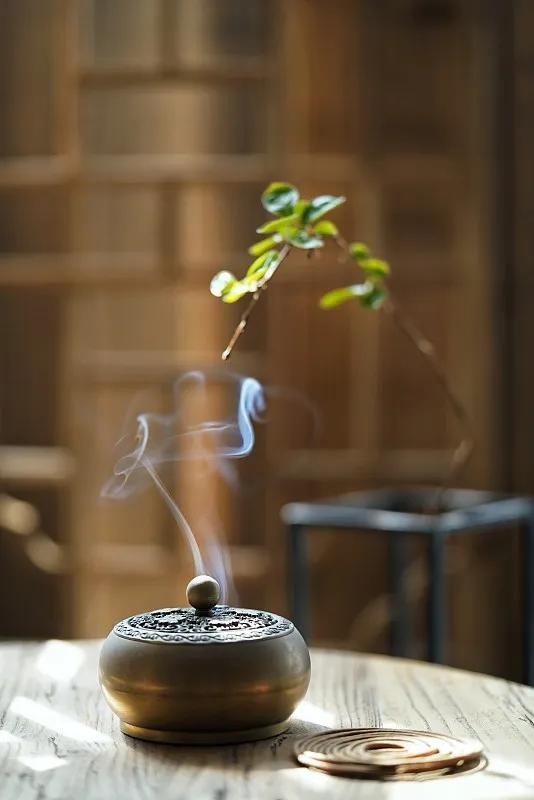
Incense Ceremony
Learn traditional incense-making and incense-appreciation etiquette, calm the mind and cultivate oneself, and deeply experience the elegance of Chinese lifestyle aesthetics.
Contact
Detailed Introduction
In the major civilizations of the world, humanity's pursuit of fragrance has ancient origins — Egyptians created unguents, Indians burned sandalwood, and Europeans distilled perfumes. But only in China was the practice of incense elevated to the height of 'Dao', becoming a complete cultural and artistic system integrating olfactory aesthetics, spiritual cultivation, philosophical reflection, and social etiquette. This is Chinese Incense Dao — an Eastern life aesthetic of cultivating one's character and clarifying one's mind to contemplate the Dao through the appreciation of natural aromatic materials. For overseas friends, approaching Chinese Incense Dao means approaching the refined and elegant spiritual life of the Chinese people, feeling the inner world of thousands of years of scholars and literati amidst a wisp of fragrant smoke.
I. The Historical Origins of Chinese Incense Dao: A 5,000-Year History of Fragrant Civilization
1. Ancient Times: Incense for Rituals to Connect with Heaven and Spirits
The history of incense use in China dates back to the Neolithic period, five thousand years ago. Ancestors burned fragrant herbs and woods in sacrificial ceremonies, believing that the curling smoke could convey human prayers to the gods of heaven and earth. The oracle bone inscriptions already contained a primitive form of the character 'fragrance' — with drooping wheat ears above and a mouth below, symbolizing the pleasant aroma emitted when the grains ripen. During the Shang and Zhou dynasties, the 'Yin sacrifice' system was established, making the burning of fragrant herbs and spices a standardized ritual for state ceremonies, thus integrating incense into the core of Chinese ritual and musical civilization.
2. Han, Wei, and Six Dynasties: The Eastward Spread of Western Region Aromatic Materials and Noble Use of Incense
During the reign of Emperor Wu of the Han Dynasty, the opening of the Silk Road brought a large influx of exotic spices to the Central Plains — sandalwood, agarwood, borneol, storax, and frankincense. These precious aromatic materials from the Western Regions, Southeast Asia, and the Arabian Peninsula greatly enriched the olfactory landscape of the Chinese people. At that time, noble life was permeated with strong fragrances; fumigating rooms, scenting clothes, and holding chicken tongue incense in the mouth became fashionable among the upper class. Interestingly, the early introduction of Buddhism also promoted the use of incense — the term 'incense fire' is still used today to refer to worshippers at religious sites.
3. The Prosperous Sui and Tang Dynasties: The Comprehensive Flourishing of Incense Culture
The Tang Dynasty was an era of unprecedented prosperity for Chinese incense culture. The imperial court established a specialized 'Shang Yao Bureau' to manage royal incense use. Noble banquets necessarily burned famous incenses. The poems of Li Bai, Du Fu, Bai Juyi, and Wang Wei are suffused with fragrances. The monk Jianzhen traveled east to Japan, not only bringing Buddhist scriptures and precepts but also complete incense formulas and appreciation techniques. Japanese Incense Dao developed precisely on this foundation, with its origins in China's Tang Dynasty.
4. The Peak of the Song Dynasty: The Way of Incense Moves into Scholarly Life and Spiritual Cultivation
During the Two Song Dynasties, Chinese incense culture reached its peak. Unlike previous eras, the scholar-officials of the Song Dynasty were no longer content with passively smelling incense; instead, they actively participated in the entire process of blending, appreciating, and evaluating incense. They established 'incense rooms' in their homes, inviting three or five close friends for elegant gatherings to appreciate incense; they wrote specialized treatises on incense, meticulously recording various incense formulas and their personal insights on appreciation; they elevated the appreciation of incense alongside tea preparation, hanging paintings, and flower arranging, collectively known as the 'Four Elegant Pursuits' of the literati, making it a daily practice for self-cultivation and moral refinement. By this point, the use of incense had truly transformed from religious rituals and aristocratic displays of wealth into a restrained and profound spiritual life.
5. From the Ming and Qing Dynasties to the Present: From Daily Elegance to Contemporary Revival
During the Ming and Qing dynasties, incense culture further spread among the common people. Incense sticks began to gain popularity, making the burning of incense more convenient and routine. The craftsmanship of incense burners, incense boxes, incense tongs, and other implements reached its peak, with the Xuande incense burner still considered the pinnacle of Chinese bronze art today. From the late Qing dynasty to the 20th century, social upheaval caused incense culture to decline for a time. In recent years, with the revival of traditional culture, incense culture has re-entered the spiritual life of the Chinese people, attracting an increasing number of overseas enthusiasts with its unique Eastern elegance.
II. The Core Spirit of Incense: Why Appreciate Incense
1. Cultivating the Spirit: Finding Inner Peace in Fragrance
The Song Dynasty literary master Su Shi once wrote: "Burning incense and sitting in silence, one deeply reflects and self-examines, then both the self and the external world are forgotten, and both body and mind become empty." These sixteen characters precisely articulate the fundamental pursuit of Chinese people in appreciating incense. Appreciating incense is not as simple as smelling a scent; it is a process of focusing the mind, letting go of distracting thoughts, and returning to present-moment awareness. Sitting quietly before an incense burner, watching the wisps of smoke curl upward, and sensing the layered changes in the fragrance, one's thoughts detach from the hustle and bustle of daily life, entering a state of tranquil peace. This state coincides with the effects pursued by modern mindfulness meditation.
2. Clarity of Mind: Using Fragrance as a Mirror to Reflect on Oneself
Chinese incense culture emphasizes 'Tasting incense is tasting the heart'—your perception of fragrance reflects your current state of mind. When the mind is restless, even the finest incense lacks layers; when the mind is peaceful, a single wisp of smoke is enough to touch the heartstrings. Incense culture offers an opportunity for self-observation: by noticing one's reactions to fragrance, one can reflect on the inner fluctuations and states. This is the wisdom unique to Chinese culture—'cultivating the heart through objects'—using the tangible (incense) to refine the intangible (the spirit).
3. Aesthetics: The Unique Olfactory Art of the Chinese
In Western aesthetic traditions, vision and hearing have long dominated, with olfactory aesthetics remaining relatively marginalized. Chinese incense culture, however, developed an extremely refined language for olfactory appreciation—fragrance is divided into three evolving stages: initial, main, and lingering notes; evaluation dimensions encompass purity and turbidity, intensity and subtlety, elegance and vulgarity, freshness and age, dryness and moisture; the standard for good incense emphasizes four qualities: 'sweetness, purity, mellow richness, and lingering charm.' The Chinese approach incense tasting with the same attitude as appreciating paintings, viewing the burning process of an incense censer as a fleeting olfactory artwork.
III. Four Famous Incenses and Common Incense Materials
1. Agarwood (Chenxiang)—The Foremost of All Fragrances, the King of Incenses
Agarwood is not the name of a specific tree but a precious fragrance formed when trees of the Thymelaeaceae family secrete resin mixed with wood after being struck by lightning, infested by insects, or infected by fungi, then naturally aged over decades or even centuries. At room temperature, its scent is faint and subtle, but once heated, it releases an incredibly rich and layered aroma—sweet, cool, floral, fruity, honeyed, and milky notes emerge successively, endlessly transforming. Chinese incense culture regards agarwood as the highest object of appreciation, emphasizing 'one wood, five fragrances, each with its own marvel.' Agarwood is primarily produced in Southeast Asia and China's Hainan and Guangdong regions, with Hainan agarwood being praised by ancients as 'supreme under heaven.'
2. Sandalwood (Tanxiang)—Solemn and Elegant, with Eastern Zen Charm
Sandalwood is derived from the heartwood of the sandalwood tree, offering a mellow, warm, and long-lasting stable fragrance, contrasting with the variability of agarwood. Indian Mysore sandalwood is universally acknowledged as the finest variety. In Chinese Buddhist temples, sandalwood is the most common offering incense, with the term 'zhantan' (sandalwood) frequently appearing in Buddhist scriptures. Its scent evokes a sense of serenity, stability, and tranquility, making it a common material for daily incense burning and meditation practice.
3. Ambergris — A Marine Treasure and Exceptional Fixative
Ambergris is a pathological secretion from the intestinal tract of sperm whales, formed after being washed by seawater for a long period and oxidized by sunlight. Its own scent is not strong, but when added to other fragrances, it can make the aroma soft and long-lasting, serving as a 'fixative' in blended incense. The extremely precious 'Ambergris Incense Cakes' of the Song Dynasty were made by blending a small amount of ambergris with various aromatic substances, and were considered the supreme treasure among incenses.
4. Musk — King of Animal Scents
Musk is the secretion from the scent gland sacs of male musk deer. Its aroma is intense and long-lasting, with extremely strong penetrating power. In traditional Chinese blended incense, musk serves to open the orifices and refresh the mind, as well as to carry and fix scents. Due to wildlife protection, natural musk is now extremely rare and expensive, and modern incense practice mostly uses artificial musk or plant-based substitutes. For foreign friends concerned about ecology, you should know that contemporary legitimate incense practitioners have essentially abandoned the use of natural musk.
5. Other Common Incense Materials
Besides the four famous incenses, Chinese incense practice uses dozens of natural aromatic materials, mainly including:
- Resinous: Frankincense, Myrrh, Benzoin — Often seen as Middle Eastern aromatic materials, integrated into the Chinese blended incense system after introduction
- Woody: Agarwood, Cedar, Pine — Simple and natural aromas, commonly used for daily incense burning
- Herbal: Patchouli, Eupatorium, Mugwort — Cool and refreshing scents, mostly used in summer to repel heat and prevent epidemics
- Floral: Clove, Osmanthus, Jasmine — Rich floral aromas, often used in blended incense to enhance flavor and add layers
- FruityBergamot, orange peel — fresh and lively, adding top-note variation to blended incense
IV. Incense Appreciation Forms and Common Tools
1. Seal Incense: The Beauty of Time's Shape and Order
Seal incense, also known as 'stamp incense,' involves filling a mold carved with auspicious patterns with prepared incense powder, pressing it firmly, then releasing the mold to create continuous seal characters or patterns like auspicious clouds and lotus flowers. Once one end is lit, it burns slowly along the pattern. The burning time of a censer of seal incense can be precisely controlled, and ancients often used it for timekeeping. The process of creating seal incense requires extreme patience and focus — using an incense spoon to evenly fill the mold's grooves with powder, smoothing it with an incense spatula, and finally lifting the mold vertically in one fluid motion. This process itself is a meditation practice.
2. Indirect Heat Incense: An Elegant Smoke-Free Appreciation Method
Indirect heat incense is the most characteristic appreciation method of Chinese incense ceremony — fully burning special incense charcoal, burying it in incense ash, covering it with a thin layer of ash, then placing a mica sheet or silver leaf over it, with small pieces of agarwood placed on top. The charcoal's heat gently transmits through multiple layers of medium, slowly releasing the aromatic substances in the incense material, achieving the elegant state of 'fragrance without visible smoke.' This method maximally protects the delicate aromatic components of the incense material that are easily damaged by heat, allowing one to experience the most complete aromatic progression of a piece of agarwood. Indirect heat incense requires extremely precise fire control and represents the essence of incense ceremony craftsmanship.
3. Incense Sticks and Incense Pellets: Convenient and Pleasant Daily Incense
- Incense SticksA convenient form popularized after the Ming Dynasty, made by mixing incense powder with natural binding powder (such as Phoebe nanmu bark powder) into thin sticks and drying them. They only need to be lit, making them the most commonly used method in temple worship and modern homes.
- Incense Pills & CakesMultiple aromatic herbs are ground and blended according to a formula, then bound with honey or jujube paste into pill or cake form. To release their fragrance, they must be heated and smoked over charcoal. This was the most mainstream method of using blended incense during the Tang and Song dynasties.
4. Core Incense Ceremony Tools: The 'Three Essential Items of Censer and Vase'
A basic set of incense ceremony tools typically includes the following core items, commonly known as the 'Three Essential Items of Censer and Vase':
- Incense BurnerThe main vessel for holding the incense material. Materials are mostly copper or porcelain. The Ming and Qing Dynasty Xuande censers are classic copper examples, while Song Dynasty porcelain incense burners are considered elegant masterpieces among porcelain.
- Incense BoxA small container for storing incense materials, commonly made of lacquerware, porcelain, or carved wood.
- Incense Chopstick Holder (Chopstick Vase)A vase-shaped container for holding incense tongs (metal chopsticks for handling charcoal) and an incense spoon (a small spoon for taking incense material).
Additionally, indirect heating incense smoking also requires supplementary tools such as incense charcoal for burning, mica separators, and tools for arranging incense ash, including an ash press, incense spatula, and feather duster.
V. How to Appreciate Incense: From Sensory Experience to Spiritual Cultivation
1. Mental Preparation for Incense Appreciation: Let Go of Distractions, Stay Present
Before appreciating incense, first quiet yourself. This requires no religious belief—simply put down your phone and daily trivialities for a moment, carving out ten minutes of pause in your life. In ancient times, people would even wash their hands and change clothes before appreciating incense, as a sign of solemnity. The calmer and more relaxed your mindset, the more you can perceive the subtle nuances within the fragrance.
2. Five Steps of Incense Appreciation
** Step One: Observe the Smoke.** After lighting the incense, first admire the form of the smoke. The wisps of smoke may rise straight, spiral, or drift apart—each moment is different. Chinese literati considered observing smoke a form of visual meditation, perceiving the impermanence of worldly things through its gathering and dispersal.
** Step Two: Initial Appreciation.** When the fragrance first emerges, it is called the "top note"—fresh and direct, much like the first impression when meeting someone new. The fragrance at this stage is often the most vivid, forming the first layer of the incense appreciation experience.
** Step Three: Detailed Appreciation.** As time passes, the fragrance enters the "heart note" stage, which is the core and most enduring characteristic of the scent. Breathe deeply and quietly, sensing how the fragrance unfolds in your olfactory space—is it sweet or cool, deep or light, clear or rich?
** Step Four: Lingering Aftertaste.** As the incense burner reaches its end, the lingering essence left behind is called the "base note." The base note is often the most enduring, like a slow aftertaste in the mouth. Savoring the base note is like reflecting on an experience—the aftertaste is often more intriguing than the initial encounter.
** Step Five: Contemplation.** After finishing the incense appreciation, do not rush to speak or check your phone. Let yourself linger in this tranquility for a moment longer. Note down the physical and mental sensations brought by the incense—peace, relaxation, clarity, joy. This awareness is the most valuable gain from the practice.
3. Taboos & Etiquette in Incense Appreciation
- Do not wear perfume while appreciating incense, to avoid interfering with the judgment of the scent.
- When smelling incense, do not bring your nose directly close to the censer for a strong sniff. Instead, maintain a distance of about one foot, allowing the fragrance to naturally drift into your nasal passages.
- When passing the censer, hold it with both hands as a sign of respect.
- During the incense appreciation process, minimize conversation to maintain a quiet environment for smelling.
- After finishing one censer of incense, you may take a sip of warm, plain water to cleanse your palate before appreciating the next censer.
VI. Incense and the Spiritual Life of the Chinese People
1. Incense and Zen Meditation: A Practice Method of Entering Samadhi Through Fragrance
In Chinese monasteries, burning incense is a standard ritual for morning and evening services, sutra chanting, and seated meditation. Monks believe that the fragrances of sandalwood and agarwood can clear the mind, calm the spirit, and help one enter a state of samadhi, gathering scattered thoughts into a single point. In some Zen traditions, appreciating incense itself is a direct method of practice — observing incense is like observing the mind; the arising, ceasing, gathering, and scattering of incense mirrors the arising and falling, the impermanence of thoughts. This method of using incense as a form of Zen may offer a gentler path to inner stillness for foreign friends unaccustomed to seated meditation.
2. Incense and Health Cultivation: Aromatherapy from the Perspective of Traditional Chinese Medicine
Traditional Chinese Medicine believes that "fragrance enters the spleen." Aromatic drugs can invigorate the spleen and stomach, regulate qi and relieve depression, and transform dampness through fragrance. Ancient physicians often used aromatic medicines to prevent plagues, and the custom of wearing sachets during the Dragon Boat Festival to ward off evil and epidemics persists to this day. Different aromatic materials have different channel tropisms and efficacies in TCM theory — sandalwood warms the middle and harmonizes the stomach, agarwood moves qi and stops pain, patchouli releases the exterior and transforms dampness, and angelica root opens the nasal orifices. This system of aromatic medicinal application, built upon the theories of meridians and organs, represents an Eastern wisdom of fragrant nourishment parallel to Western aromatherapy.
3. Fragrance and the Literati: A Spiritual Home in Scent
Opening the pages of ancient Chinese poetry and prose, fragrance is a frequently occurring imagery — Li Qingzhao's "Rui brain burns in the golden beast" depicts the solitude before an incense burner on an autumn night, Su Shi's "A stick of incense vanishes, the fire grows cold" expresses nostalgia for an old friend, and Wen Zhengming in "Burning Incense" writes, "The wondrous realm may first be perceived by the nose, all worldly ties are washed away, cleansing the mind's army." For the literati, a good incense burner in the study was the best companion for reading and writing, a spiritual shield against the clamor of the outside world. This lifestyle of befriending fragrance and nurturing the mind with it constitutes one of the most distinctive spiritual qualities of Chinese scholar-officials.
The Way of Chinese Incense is not a complex art requiring innate talent, but a door that anyone can push open. Inside, there are no harsh standards, only a wisp of blue smoke and a quiet moment of solitude with yourself. You need not become an expert in aromatic materials, nor memorize complex incense formulas. You only need to light a stick of incense, sit down, and feel how that wisp of warm fragrance disperses in the air, how it touches your olfactory nerves, and how it allows you, in that moment, to forget the clamor outside the window.
The true Way of Incense lies not in expensive aromatic materials, nor in elaborate rituals. It exists in that very moment when you sit quietly before a burner of incense — your heart and the smoke both still, you and the fragrance both serene. This is the realm the Chinese speak of as "the Dao is in the everyday." May this wisp of Eastern fragrance become a fragrant journey for you to understand Chinese culture.