Xingyiquan
Cultivate both internal and external strength to solidify the foundation, learn concise and practical techniques, and comprehend the philosophy of Eastern martial arts.
Contact
Detailed Introduction
Xingyiquan, also known as Xingyi Quan, is a traditional classic Chinese martial art, alongsideTaijiquan (Tai Chi) and Baguazhangrenowned, listedThree Major Internal Chinese Martial Artstogether, and is also one of China's four great famous martial arts. It is a representative style within the Chinese Neijia (internal) martial arts system, featuring a unique style and extremely strong combat effectiveness. Unlike the circular softness of Tai Chi or the evasive footwork of Bagua, Xingyiquan is characterized by its direct advance and retreat, simplicity, power, stability, and efficiency, standing out uniquely among internal martial arts. It possesses dual value in both health cultivation and spiritual practice, as well as practical combat techniques. In 201an, Xingyiquan was officially included inThird Batch of National Intangible Cultural Heritage List。
I. Origin and Development of Xingyiquan
1. Initial Creation: Origin of Xinyi Liuhe Quan
There are many theories about the origin of Xingyiquan. The widely recognized founder within the field isJi Jike (1602-1680), a martial arts master from Puzhou (now Yongji City), Shanxi, during the late Ming and early Qing dynasties.. When the fist technique was first created, it was namedXinyi Liuhe Quan, the core emphasizes the unity of the Six Harmonies, namely: heart and mind unified, mind and breath unified, breath and strength unified, shoulders and hips unified, elbows and knees unified, hands and feet unified, which serves as the foundational pillar and core principle of the entire fist system.
2. System Formalization: Li Luoneng's Innovation and Establishment of the School
The orthodox Xingyiquan widely practiced globally today was developed and formally named bythe master Li Luoneng (1808–1890) from Shenzhou, Hebei during the Qing Dynasty's Daoguang era, based on the traditional Shanxi Dai family Xinyiquan. He improved, perfected, innovated, and formally named it. Li Luoneng established the martial arts core of 'high unity of internal intent and external form,' standardized the entire system of techniques, and laid the complete framework for modern Xingyiquan, earning him reverence asPatriarch of Xingyiquan。
3. Lineage and Later Development
During the early Qing period, the prototype of Xinyiquan was already widely circulated in Shanxi, Henan, and Hebei. Over a century, numerous renowned masters emerged, and the lineage flourished. In 1914, the famous Xingyiquan master Haoenguang traveled east to Japan, opened classes, and taught Chinese students studying abroad, first introducing Xingyiquan overseas and initiating its international spread.
Li Luoneng had numerous disciples, among whom eight—Che Yonghong, Song Shirong, Song Shide, Li Guanghen, Guo Yunshen, Liu Qilan, Liu Xiaolan, and He Yunheng—were the most renowned. They passed down the teachings generation after generation, spreading Xingyiquan throughout the country. Later generations in the Beijing region further derived branches such as Yiquan and Dachengquan from the traditional Xingyiquan, enriching and perfecting the martial arts system.
II. Core Practice System of Xingyiquan
The orthodox Xingyiquan system established by Li Luoneng features a clear structure, progressing from simple to complex, with the core comprisingSanti Shi (Three-Body Stance) post standing, Five Elements Fist, and Twelve Animal FormsThese three major components form a practice system that is refined, efficient, and free of superfluous or flashy movements. Each form integrates foundational building, health cultivation, and combat application.
1. Santi Shi Stance (Foundation of All Techniques)
Santi Shi is the unique foundational skill and core internal training method exclusive to Xingyiquan, serving as the root of all Xingyi movements. It has long held the"All techniques originate from Santi Shi"supreme evaluation in martial arts circles. Long-term practice of Santi Shi can regulate body posture, harmonize qi and blood, stabilize the lower body, condense internal strength, and open up the body's power channels, making it the core post standing practice for building the foundation, nurturing strength, and cultivating intent in Xingyiquan.
2. Five Elements Fist (Five Elements Transformation, Corresponding to Five Organs)
The Five Elements Fist integrates the traditional Chinese philosophical concepts of the Five Elements (Metal, Wood, Water, Fire, Earth) with Traditional Chinese Medicine health preservation principles. It corresponds to the Five Elements, Five Forces, and Five Organs, with distinct offensive and defensive techniques and varying power methods. It is the core foundational technique of Xingyiquan.
- Splitting Fist (Metal Element): Governs descending and nourishing the lungs, with force that is solid, continuous, and focused on chopping attacks and defenses.
- Drilling Fist (Water Element): Governs ascending and nourishing the kidneys, with force that is penetrating and agile, focused on surprise raids and piercing strikes.
- Crushing Fist (Wood Element): Governs stretching and nourishing the liver, with force that is crisp, sharp, and swift, focused on linear heavy blows.
- Cannon Fist (Fire Element): Governs bursting and nourishing the heart, with force that is explosive and short, focused on powerful offensive bursts.
- Crossing Fist (Earth Element): Governs embracing and nourishing the spleen, with force that is thick, rounded, and harmonious, focused on horizontal blocking, neutralizing, and transforming attacks and defenses.
3. Twelve Animal Forms (Biomimetic Combat, Capturing Intent, Not Form)
The Twelve Animal Forms are biomimetic combat techniques, created by emulating the hunting, attack, and defense characteristics of twelve fierce beasts and agile birds. The core practicedoes not seek superficial resemblance, but rather true intent.The focus is on distilling the offensive spirit and practical combat power of various creatures, with techniques that are concise, fierce, and highly practical in combat. The twelve forms are: Dragon Form, Tiger Form, Bear Form, Snake Form, Swallow Form, Monkey Form, Horse Form, Rooster Form, Swallow Form, Alligator Form, Sparrowhawk Form, and Eagle Form.
III. Unique Martial Style and Combat Characteristics of Xingyiquan
Xingyiquan has a highly distinctive style among the three internal martial arts, differing from Taijiquan's centered, circular, and soft approach, slow practice for fast application, and overcoming hardness with softness; and from Baguazhang's multidirectional movement, circular flanking, and skillful use of leverage. Xingyiquan emphasizesstraightforward advance, hard strikes and forceful entry, concise and swift movementsThe combat style is clean and decisive, without flashy techniques. Power erupts extremely quickly, and the rhythm of attack and defense is very fast, like lightning flashes and thunderclaps, or a river breaching its banks, with a majestic momentum and an unstoppable advance.
Its tactical style is extremely suited for battlefield combat, requiring no complex evasive maneuvers amidst thousands of troops. It focuses onadvancing while striking, striking while advancing, moving forward step by step, and launching continuous powerful attacksmaking it a rare fiercely aggressive type of martial art among internal styles. Overall, it followsRelaxed Form, Intent TautIts core characteristics are an outward form that is relaxed, natural, and unconventional, while the internal intent is compact and filled with power. The fighting techniques are unpredictable, integrating offense and defense as one.
IV. Core Essentials for Practicing Xingyiquan
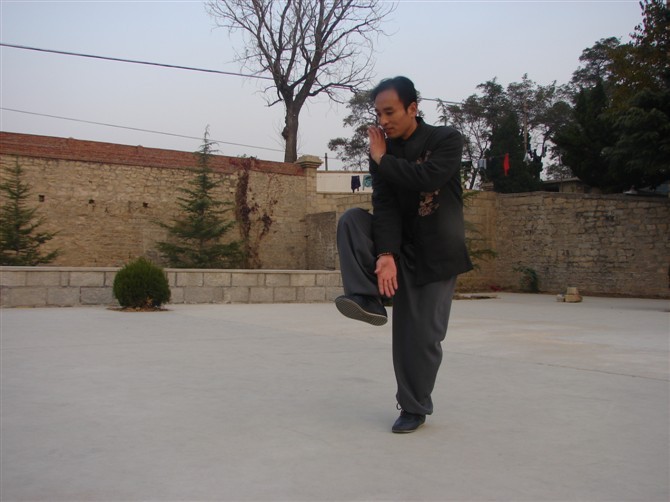
Xingyiquan has strict normative requirements for body shape, power, breath, and intent. The seven core practice essentials run through the entire process and are the key to mastering Xingyiquan: one, sinking the waist; two, retracting the shoulders; three, covering the chest; four, pressing up; five, lifting; six, distinguishing horizontal and vertical; seven, clearly executing drilling, falling, and turning.
- Sink the Waist: The tailbone is lifted upward, stabilizing the waist and body, rooting the foundation, and connecting the power flow between the upper and lower body.
- Retract the Shoulders: Both shoulders are drawn back and retracted, gathering power and storing momentum, without leaking force or becoming stiff.
- Hollow the Chest: Opening the chest and smoothing the breath, ensuring the smooth circulation of internal energy.
- Pressing Force: The crown of the head, the tongue, and the hands press upward, combining the three upward pressures into one. This promotes an upright and centered posture, with abundant essence, energy, and spirit.
- Lifting Force: The neck is lifted inward, and the entire body gathers breath, lifting the spirit and focusing intent, making the whole body compact.
- Clear Distinction Between Horizontal and Vertical:Horizontal as the start, smooth as the fall, with orderly rises and falls, and a clear path of force.
- Clear Distinction Between Drilling, Dropping, and Flipping:Rising and drilling, falling and turning, with a thorough path of force, clean movements, and clear layers.
V. Tactical Thought and Combat Theory of Xingyiquan
1. Core Tactical Concepts
Xingyiquan contains rich combat theory and a tactical system, emphasizing the martial spirit ofadvancing courageously, daring to fight and sure to win, and facing danger without fearAs the martial saying goes: 'When meeting an enemy, have a master; when facing danger, do not fear.' Tactically, it focuses on speed and suddenness, taking the initiative, and striking first, adhering to the practical principle of'Attack when they are unprepared, strike when they are unexpected.'It emphasizes intention leading without revealing any trace, meaning 'If you intend, do not show form; if you show form, you will not win.'
Primary Offensive and Defensive TechniquesClose-range rapid attacks, seizing the central gate, the boxing maxim 'The eyes must be sharp, the mind cunning, the feet step into the central gate and drill through the crotch' 'To advance is to evade, to evade is to advance; there is no need to seek far' precisely summarizes its close-combat core. The fist method advocates the combined use of seven techniques—head, shoulder, elbow, hand, hip, knee, and foot—where the entire body can generate force and every part can attack or defend: use hands at a distance, add elbows up close; kick with feet from afar, strike with knees nearby. Combining emptiness and fullness, acting according to the situation, ultimately achieving the superior martial arts realm ofno form in form, no intent in intent; within unintentionality lies true intent.
2. Six Principles of Combat (Six Aspects of Skill)
Xingyiquan has summarized six complete combat principles, guiding practitioners to standardize offensive and defensive awareness and hone practical combat skills, namelySkillful, Smooth, Courageous, Swift, Fierce, True:
- Skillful: The techniques are exquisite, the force generation scientific, using skill to control power, not relying on brute force.
- Natural: In accordance with body shape, breath mechanics, and force pathways, generating power naturally, smoothly, and coherently.
- DecisiveCalmness in the face of the enemy, decisive action, no hesitation, no cowardice.
- SwiftRapid and fierce techniques, sudden offense and defense, seizing the initiative, quick victory in battle.
- FierceClean and efficient offense and defense in actual combat, precise execution, controlled suppression of the opponent.
- SolidTrue force, precise impact, making it difficult for the opponent to escape or find a way to neutralize.
Six, Levels of Cultivation of Power in Xingyiquan
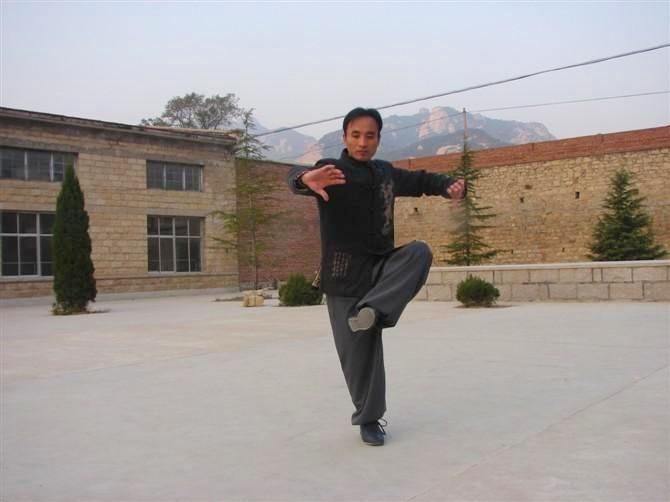
Xingyiquan places extreme emphasis on the cultivation of power, with clear and progressive levels of advancement, divided into three realms, from external to internal, from coarse to refined:
- First Level: Ming Jin (Manifest Force)Foundation building and body strengthening, tempering the entire body's muscles and bones, solidifying the physical foundation, achieving hard bone structure and robust physique, laying a solid groundwork for advanced techniques and power enhancement.
- Second Level: An Jin (Hidden Force)Internal accumulation and storage of power, complete body integrity, power hidden within the body, free to release and retract, achieving a balance of hardness and softness, integration of form and spirit.
- Third Level: Hua Jin (Transforming Force)Focus, unify body and spirit, guide the body with intention, generate power with qi, achieving complete unity of intention, breath, movement, and force, reaching the highest level of internal martial arts cultivation.
VII. The Cultivation Value and Suitable Practitioners of Xingyiquan
Xingyiquan movements are upright and balanced, with controllable hardness and softness, and adjustable intensity, making it suitable for practitioners of all age groups and different physical conditions. As a high-level internal martial arts method that cultivates both internally and externally, Xingyiquan perfectly combines external limb movements with internal true qi circulation, emphasizing leading qi with intention and controlling force with qi, achieving a four-in-one unity of intention, breath, movement, and force.
Long-term persistent practice of Xingyiquan canstrengthen the body's muscles, bones, and physique externally, while nourishing the internal organs and true qi, capable of warding off illness and prolonging life, regulating body and mind, purifying temperament, and boosting willpower. At the same time, one can master efficient close-quarters self-defense and protection skills, combining multiple values of health preservation, fitness, mental cultivation, self-defense, and inspiration.
As a national-level intangible cultural heritage and one of China's three major internal martial arts, Xingyiquan sheds the mysterious veil of traditional martial arts, standing out with its simple, efficient, pragmatic, and upright characteristics. It possesses the foundation of internal martial arts for cultivating the mind and nourishing qi, as well as the fierce and practical combat ability of external martial arts. Direct, clean, and following the natural way, it is one of the most perfectly combined martial arts in Chinese traditional martial arts for both offense/defense and health preservation. After centuries of inheritance, it still radiates powerful martial arts vitality.