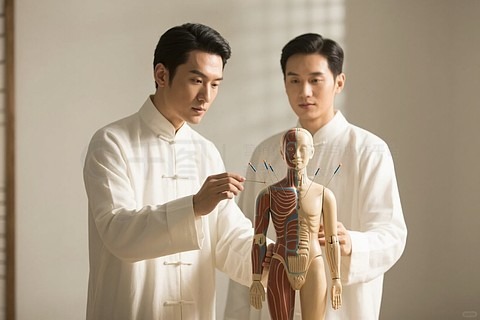
Acupuncture Practice
Systematically master practical acupuncture techniques and acquire Chinese-style health and wellness skills suitable for overseas practice.
Contact
Detailed Introduction
Acupuncture, an ancient therapy originating from China with over two thousand years of history, has now become a globally recognized treasure of complementary medicine. A metal needle as fine as a hair, gently inserted into specific points beneath the skin, can alleviate pain, regulate functions, and awaken the body's dormant self-healing power—for friends overseas encountering it for the first time, this might sound incredible. But it is precisely this treatment approach, which does not rely on drugs and focuses on the body's own regulatory mechanisms, that has led the World Health Organization (WHO) to recommend over one hundred conditions suitable for acupuncture treatment. This article will take you beyond mystery and misunderstanding to systematically understand this wisdom of the body from the East, covering its history, theory, experience, and efficacy.
I. What is Acupuncture in Traditional Chinese Medicine?
1. Acupuncture is more than just "needle insertion"
Many Western friends, upon first hearing "Acupuncture," instinctively react with "poking needles into the body." However, in reality, acupuncture in Traditional Chinese Medicine is a complete and rigorous diagnostic and therapeutic system. It encompasses two major techniques: "acupuncture" and "moxibustion":Acupunctureinvolves inserting extremely fine, disposable, sterile metal needles at specific angles and depths into specific acupoints on the body's surface;Moxibustioninvolves burning a herbal medicine called mugwort (moxa) above an acupoint, using its warmth to penetrate deep tissues. The two are often used in combination, regulating the body's energy and information networks through physical stimulation, rather than directly injecting chemical substances into the body.
2. A Long History and Global Spread
The origins of acupuncture can be traced back over two thousand years to the "Huangdi Neijing" (Yellow Emperor's Classic of Internal Medicine), a foundational text of Chinese medicine that systematically discusses meridian pathways and acupoint indications. The "Tiansheng Acupuncture Bronze Figure," cast during the Song Dynasty, is the world's oldest anatomical teaching model. In 1971, American journalist James Reston reported his experience of receiving acupuncture treatment for post-surgical pain in China in "The New York Times," sparking interest in the Western world. In the decades since, acupuncture has spread globally. Today, authoritative institutions such as the United States' National Institutes of Health (NIH) and the United Kingdom's National Institute for Health and Care Excellence (NICE) include acupuncture in recommended treatment plans for various conditions, and it is now used in over 180 countries and regions worldwide.
II. How Does Acupuncture Work? The Core Theory of Chinese Medicine
For Western friends unfamiliar with the philosophy of Chinese Medicine, a metaphor can help understand the underlying logic of acupuncture: Imagine the human body as an irrigation system composed of countless rivers (meridians), where life energy (Qi) is the water flowing in these rivers. When healthy, the water flows unobstructed, irrigating the entire body; once a river channel becomes blocked by silt or the water volume becomes imbalanced, the fields downstream (the zang-fu organs) will encounter problems. The acupuncturist's job is to stimulate specific gates (acupoints) along these river channels to clear blockages, regulate water volume, and restore the entire system to balance.
1. Meridians and Acupoints: The Map of the Body's Energy Channels
Traditional Chinese Medicine theory holds that the human body contains twelve primary meridians (corresponding to the five Zang and six Fu organs) and the eight extraordinary meridians, among other branches. These connect internally to the organs and externally to the limbs and joints, forming an energy transport network that covers the entire body. Distributed across this network are hundreds of specific 'acupoints,' which are gateways for the movement of Qi. Each acupoint has clear therapeutic functions; for example, the Hegu point on the head and face is adept at relieving pain, while the Zusanli point below the knee joint excels at regulating digestion and immunity. Acupuncturists use the four diagnostic methods—'observation, auscultation, inquiry, and palpation'—to determine which meridian is affected, and then select the corresponding acupoints for intervention.
2. Qi and Blood: The Dynamic Balance of Life's Vitality
“Qi” and “Blood” are the two core substances in Traditional Chinese Medicine that describe life activities. In simple terms, Qi is the driving force behind all physiological functions, while Blood is the material basis that nourishes all tissues and organs. When Qi flows, Blood flows; when Qi stagnates, Blood stasis occurs. When the body’s Qi mechanism becomes obstructed in a certain area due to cold, injury, stress, or fatigue, pain, stiffness, or functional decline will appear. Acupuncture, by stimulating acupoints, can “obtain Qi” — guiding the meridian Qi to return, promoting the reflow of Qi and Blood, thereby restoring the nutritional supply and metabolism of local tissues.
3. Yin-Yang Harmony: Returning from Imbalance to Balance
Traditional Chinese Medicine views health as a dynamic balance of Yin and Yang. When the body's internal equilibrium, or the balance between the body and the external environment, is disrupted in terms of cold and heat, exterior and interior, or deficiency and excess, illness occurs. Acupuncture, through the application of different techniques to acupoints—such as the speed and strength of lifting-thrusting and twisting manipulations—can produce bidirectional regulatory effects, like warming and supplementing Yang energy or clearing heat and reducing fire. The ultimate goal is to help the body return to that unique point of balance. This is precisely why the same Zusanli acupoint can both regulate weak digestive function and alleviate gastrointestinal discomfort caused by internal heat.
III. How does modern science explain acupuncture?
Many overseas clients are concerned about a key question: Is there a modern scientific basis for the effectiveness of acupuncture? The answer is yes. For decades, research in neuroscience and physiology has revealed the mechanisms of acupuncture from multiple dimensions, making it no longer just 'ancient wisdom'.
1. Nervous System Regulation
The area where an acupuncture point is located is often densely distributed with nerve endings and receptors. The physical stimulation produced when the needle is inserted is converted into electrical signals that travel along nerves to the spinal cord and brain, triggering the central nervous system to release various neurotransmitters. Functional magnetic resonance imaging (fMRI) studies have confirmed that needling specific acupoints can significantly alter the activity of relevant functional areas in the brain, such as pain-relief-related brain regions and the limbic system involved in emotion regulation.
2. Endorphins and the Natural Pain Relief System
Acupuncture can promote the release of endogenous opioid substances such as endorphins and enkephalins, which are potent analgesics produced by the body itself. At the same time, acupuncture can also regulate the levels of neurotransmitters closely related to pain and emotion, such as serotonin and norepinephrine. This also explains why acupuncture has a clear therapeutic effect on conditions like chronic pain, migraines, and dysmenorrhea.
3. Connective Tissue and Local Microcirculation
Research has also found that the lifting, thrusting, and rotating motions of the acupuncture needle create subtle mechanical stretching on the connective tissue (fascia). This signal can be converted into biochemical reactions at the cellular level, promoting local vasodilation, improving microcirculation, and accelerating the metabolism of inflammatory substances, thereby effectively relieving muscle tension and inflammatory responses.
IV. A Complete Acupuncture Treatment Process
For foreign friends experiencing acupuncture for the first time, understanding the complete treatment process can help alleviate nervousness. The following are the complete steps of a standard acupuncture diagnosis and treatment:
1. Initial Consultation: Seeing You Through the Eyes of Traditional Chinese Medicine
Treatment begins with a detailed consultation. The acupuncturist will ask about your chief complaint, medical history, lifestyle, diet, sleep, and emotional state. They will also observe your tongue coating and tongue body (tongue diagnosis) and feel the pulse on both sides of your wrist (pulse diagnosis). In the Traditional Chinese Medicine system, tongue and pulse conditions are important windows for assessing the state of the internal organs' qi and blood. This process takes approximately 15-20 minutes. Only after gathering this information can the acupuncturist formulate a personalized acupoint prescription.
2. Point Selection and Sterilization
Based on the diagnostic results, the acupuncturist selects approximately 6 to 20 acupoints, commonly located on the limbs, back, and abdomen. The skin at the acupoint sites is then disinfected with medical alcohol, and a sealed, disposable, sterile acupuncture needle is taken out. In formal medical institutions in China, all needles used are single-use; they are perfectly sealed before opening and discarded after use to ensure absolute safety and hygiene.
3. Needle Insertion: Does It Really Hurt?
This is the biggest question for almost all first-time experiences. The diameter of an acupuncture needle is typically only 0.2-0.3 millimeters, much thinner than a syringe needle. When most acupoints are pierced, you feel only a slight mosquito bite sensation or a momentary mild tingling that disappears immediately. The acupuncturist will gently twirl or tap the needle into the skin with an extremely quick technique, rather than pushing it in forcefully. After insertion, you feel more of a special 'needle sensation' rather than pain.
4. De Qi: The Therapeutic Signals of Soreness, Numbness, Distension, and Heaviness
When the needle reaches the correct depth and stimulates the meridian qi, you may feel local soreness, numbness, distension, or heaviness, or a 'traveling sensation' along the meridian pathway. Traditional Chinese Medicine calls this 'De Qi,' an important sign that the therapeutic effect is occurring. The acupuncturist will confirm if the technique is correct by asking about your needle sensation. This feeling is completely within an acceptable range and does not cause pain; instead, it often brings a comfortable sensation of deep tissue being 'released.'
5. Needle Retention and Removal
The needles are usually left in the acupoints for 20 to 30 minutes. During this time, you can rest with your eyes closed in a quiet room, and your body gradually enters a state of deep relaxation. Many people fall asleep quietly during this period. After the retention period, the acupuncturist will quickly remove the needles one by one and press briefly with a dry cotton ball. At this moment, you may feel relaxed all over, as if you have shed a heavy burden. After needle removal, there is usually no bleeding, or only a tiny amount of pinpoint oozing, which is a normal phenomenon.
6. Adjunctive Therapies: Moxibustion, Cupping, and Electroacupuncture
Many acupuncture treatments do not use only filiform needles. Depending on the condition, the acupuncturist may combine the following methods:
- Moxibustion: Igniting a moxa stick to fumigate and warm above the acupoint, with the warmth penetrating deep layers. It is suitable for issues like cold-type pain, physical deficiency, and aversion to cold.
- Cupping: Creating negative pressure on the skin's surface using glass or bamboo cups to promote local qi and blood circulation, commonly used for muscle soreness and the early stages of a cold.
- Electroacupuncture: Connecting weak bioelectric pulses to fine needles to continuously stimulate acupuncture points, showing significant effects on intractable pain and nerve paralysis.
V. What are the main diseases treated by acupuncture?
The World Health Organization published a list of recommended acupuncture indications as early as 1979 and updated it again in 2003. The following are several major categories of applications with substantial support from evidence-based research:
1. Pain Management
This is the most widely applied area of acupuncture globally, including chronic neck, shoulder, lower back, and leg pain, knee osteoarthritis, migraines, tension headaches, fibromyalgia, toothaches, menstrual pain (dysmenorrhea), and postoperative pain. Multiple large-scale clinical studies confirm that acupuncture's effect on relieving chronic pain is significantly better than sham acupuncture and does not carry the addiction or gastrointestinal stimulation risks associated with pharmacological pain relief.
2. Nervous System and Mental Health
Acupuncture has good regulatory effects on anxiety, depression, insomnia, chronic fatigue syndrome, post-stroke sequelae, and facial nerve paralysis (Bell's palsy). Particularly for stress-related emotional disorders, the deep sense of relaxation experienced during needle retention is itself a highly effective neuromodulatory intervention.
3. Digestive and Endocrine Regulation
Conditions such as functional dyspepsia, irritable bowel syndrome (IBS) with alternating constipation and diarrhea, chemotherapy-induced nausea and vomiting, allergic rhinitis, asthma, female menstrual irregularities, and perimenopausal hot flashes and night sweats are all within the scope of acupuncture indications. Recent research has also found that acupuncture-assisted treatment for type 2 diabetes and obesity shows positive results.
4. Reproductive and Assisted Reproduction
The application of acupuncture in assisted treatment for infertility is receiving increasing attention. Research suggests that combining acupuncture with in vitro fertilization - embryo transfer (IVF) may improve endometrial blood flow, regulate hormone levels, alleviate anxiety, and to some extent increase implantation rates and clinical pregnancy rates.
VI. Is Acupuncture Safe? Precautions and Contraindications
1. Safety Assurance
When performed by a licensed professional acupuncturist using single-use sterile needles, acupuncture is a very safe therapy with an extremely low rate of serious adverse reactions. The most common issues are minor local bruising or brief soreness after pressure, which typically resolve on their own within a few days.
2. Contraindicated Populations and Situations
The following situations are contraindications for acupuncture or require extra caution:
- Severe bleeding disorders (such as hemophilia) or individuals taking high-dose anticoagulant medications
- Severe pacemaker dependence (Electroacupuncture is contraindicated)
- States of extreme fatigue, excessive hunger, intoxication, or profuse sweating
- The abdomen, lumbosacral region, and certain meridian points on pregnant women should be avoided
- Skin infections, ulcers, or tumors at the acupuncture site
Please be sure to inform the acupuncturist of your complete medical history and medication use before treatment, so that a professional can assess whether you are suitable for the procedure.
Acupuncture is not magic; it is a systematic body regulation technique validated by thousands of years of human experience and modern scientific testing. It does not seek quick results but focuses on the root cause, and it does not rely on external forces but skillfully harnesses the body's innate healing potential. A single fine needle, in your encounter with ancient Eastern wisdom, may lead you to reacquaint yourself with your body's sensations and potential.
Whether you have been troubled by chronic pain for a long time or are seeking a deep neural reset in a high-pressure life, traditional Chinese medicine acupuncture is worth experiencing personally. Let this delicate and gentle therapeutic tool open a new window for your health.