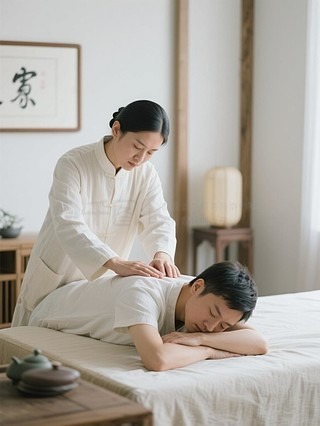
Traditional Chinese Medicine Massage
Unblock meridians to relieve body aches, master practical physiotherapy techniques, suitable for personal use and professional practice or entrepreneurship.
Contact
Detailed Introduction
Traditional Chinese Medicine (TCM) Tuina is one of the oldest and most fundamental therapies in traditional Chinese medicine, with a history of over two thousand years. It is not simply a "massage for relaxation," but a systematic treatment technique that directly applies manual techniques to the body's surface, guided by TCM meridian theory and organ theory. For overseas friends unfamiliar with TCM, Tuina can be understood as a comprehensive body conditioning method that integrates deep tissue massage, physical therapy, osteopathic techniques, and myofascial release — but its theoretical foundation and operational methods carry distinct Eastern medical wisdom. This article will guide you from the beginning to systematically understand the history, theory, core techniques, and modern application value of TCM Tuina.
1. What is Traditional Chinese Medicine Massage
1. The meaning of the name Tuina: not just "massage"
The two characters "Tuina" themselves explain the basic operational method of this technique — "Tui" means pressing and pushing, while "Na" means grasping and lifting. Unlike Western massage, which primarily targets muscles and soft tissues, Traditional Chinese Medicine (TCM) Tuina therapy covers skin, muscles, fascia, meridians, acupoints, and even bones and joints. Its theoretical basis is the TCM view of the human body centered on "Qi" and "meridians." In TCM, pain and illness in the body often stem from obstructed Qi flow or imbalances in organ function. Tuina practitioners use specific techniques to stimulate particular areas on the body's surface, regulating the internal flow of Qi and blood, thereby achieving therapeutic and health-maintenance purposes.
2. The Origin of Tuina: Two Thousand Years of Heritage
The history of Chinese massage can be traced back to the pre-Qin period. In the foundational classic of traditional Chinese medicine, the "Huangdi Neijing," written over two thousand years ago, there are multiple records of massage techniques being used to treat diseases. During the Sui and Tang dynasties, a "Massage Department" was officially established in the Imperial Medical Bureau, and massage became an officially recognized independent medical discipline. Over the subsequent millennia, massage continuously absorbed techniques from Daoyin exercises, martial arts power skills, and bone-setting methods, gradually forming the comprehensive system we see today. It can be said that massage is one of China's oldest medical techniques and is the only therapy among the many treatments in traditional Chinese medicine that uses the practitioner's hands as the direct therapeutic tool.
II. Core Theoretical Basis of Traditional Chinese Medicine Tuina
1. Meridian Theory — Energy Channels in the Body
The theory of meridians is the most important theoretical foundation of Traditional Chinese Medicine (TCM) massage. In TCM, a life energy called 'Qi' flows within the human body, circulating ceaselessly through a system of meridians that pervades the entire body. The main channels are called 'Jing', and the branches are called 'Luo'. They connect internally with the organs and externally with the limbs and joints, linking the human body into an organic whole. By pressing, pushing, and manipulating specific acupoints along the meridians with their fingers, massage therapists can regulate the flow of Qi —— when Qi is stagnant, pain occurs; when Qi flows freely, comfort is felt. Many people receiving massage therapy experience a sensation of warmth or soreness distension that travels along the meridians. In TCM terminology, this is called 'De Qi', which is considered a sign that the therapeutic effect is taking place.
2. Organ Theory — The Secret of Treating Internal Diseases Externally
Traditional Chinese Medicine (TCM) holds that there is a close reflective relationship between the internal five Zang organs and six Fu organs of the human body and specific external surface areas. For example, acupoints such as Feishu (BL13), Xinshu (BL15), Ganshu (BL18), Pishu (BL20), and Shenshu (BL23) on the Bladder Meridian of the back are the corresponding 'Back-Shu points' for their respective organs. When the function of a particular organ is imbalanced, stimulating its corresponding Back-Shu point can have a regulating effect. This explains why, when a person experiences a headache, a massage therapist may not only work on the head but also treat the neck, shoulders, and even the lumbar and back regions. For those unfamiliar with TCM theory, this approach of 'not treating the head for a headache' may seem puzzling, but it embodies the essence of TCM's holistic concept: every part of the body is interconnected, and the key to treatment lies in finding the root cause of the problem.
3. Qi, Blood, and Body Fluids — The Material Foundation of Health
'Qi' and 'Blood' are two core concepts in TCM used to describe life activities. Simply understood: Qi is the driving force that propels life processes, while Blood is the material carrier that nourishes all body tissues and organs. When Qi and Blood are abundant and flow smoothly, a person is naturally healthy; when their flow is obstructed due to cold, injury, fatigue, or emotional fluctuations, symptoms such as pain, stiffness, and fatigue will appear. Massage techniques, through their warming, unblocking, and propelling actions, help restore the normal flow of Qi and Blood, thereby alleviating symptoms and promoting self-healing.
III. Major Schools and Styles of TCM Massage
Due to its vast geography, China has seen the gradual formation of several major schools of massage throughout history, influenced by regional cultures and clinical focuses:
1. Yizhichan Massage — Penetrating Power Through Gentle Strength
Yi Zhi Chan (One-Finger Zen) Massage originated in the Jiangnan region. It uses the tip of the thumb as the point of application, and through the swinging of the forearm, the thumb performs continuous, gentle, and deeply penetrating oscillating presses on acupoints on the body surface, characterized by a fast frequency and small amplitude, delivering force deep into the tissues without damaging the skin. The technique features a small contact area, concentrated pressure, and strong penetration, making it particularly suitable for treating delicate areas such as the head and face, neck and shoulders, and around joints. Mastering the Yi Zhi Chan technique requires months to years of practice and is considered the 'precision craftsmanship' among massage techniques.
2. Rolling Massage — Large-Area Relaxation and Dredging
Gun Fa (Rolling) Massage is represented by the Shanghai region. It uses the hypothenar eminence on the back of the palm and the back of the hand as the contact surface, performing continuous, rhythmic rolling compressions on the body surface. Gun Fa has a large contact area, even force, and a stable rhythm, making it highly suitable for long-term relaxation treatment on large areas such as the back, lumbar region and buttocks, and thighs. Because its movements are relatively less physically demanding for the therapist while providing high comfort for the patient, Gun Fa has become one of the most widely used techniques in contemporary TCM massage clinical practice.
3. Nei Gong (Internal Skill) Massage — Using Qi to Guide the Hands, Penetrating Deep Layers
Nei Gong massage requires the therapist to have a certain foundation in internal skill cultivation. The technique integrates the power generation principles of Tai Chi or Qigong, using a loose, sinking, and prolonged force to penetrate the deep tissues of the patient's body. The patient often feels a gentle, lasting deep warmth during the treatment, rather than superficial stimulation. Nei Gong massage places high demands on the therapist and is more commonly seen in traditional Chinese martial arts circles and high-end wellness establishments.
4. Bone-Setting Massage — Structural Regulation Emphasizing Both Muscles and Bones
Bone-setting massage focuses more on the structural adjustment of bones and joints, often used for issues like spinal facet joint dislocation and joint dysfunction. Techniques include rocking, pulling, traction, and rotational reduction. Sometimes a popping sound occurs during the procedure, which is a normal phenomenon caused by the release of gas within the joint cavity. Bone-setting massage requires extremely high levels of anatomical knowledge and clinical diagnostic skills from practitioners. It must be performed by professionally trained physicians; imitation by non-professionals may lead to injury.
5. Pediatric Massage — Gentle and Special Techniques for Children
Pediatric massage is a specialized massage system developed based on the characteristics of infants, young children, and children. Due to their delicate bodies and sensitive acupoints, the techniques are extremely gentle, primarily involving rubbing, kneading, pinching, and pushing, and never use forceful pressing or manipulation. Pediatric massage is commonly used for digestive issues, sleep disturbances, colds and fever, and constitutional conditioning. Because it is painless and has no side effects, it is chosen by many Chinese families as the preferred method for children's daily health care.
IV. Introduction to Core Techniques of TCM Massage
The following introduces the most commonly used basic techniques in clinical massage, which form the fundamental skills for all schools of massage practitioners:
1. Pressing and Pushing Methods — Precise Delivery of Deep Pressure
Using the thumb, palm heel, or elbow tip to gradually apply vertical pressure at an acupoint or tender point, holding briefly before slowly releasing. This technique works like turning on a faucet—using sustained pressure to open blocked meridians and regulate qi and blood. The pressure can be deep or shallow; skilled massage therapists can precisely control the intensity based on patient feedback, ensuring a comfortable deep ache rather than a stabbing pain.
2. Kneading Method — Soothing and Penetrating Through Circular Motions
Using the palm heel, thenar eminence, or fingertip to gently rotate in a circular motion on the body surface, moving the subcutaneous tissue along with the fingers rather than sliding over the skin. Kneading is soothing and gentle, warming and promoting qi and blood circulation. It is often used at the beginning of treatment to relax muscles and at the end to soothe and settle. It is one of the most basic and safest techniques, with the highest patient acceptance.
3. Pushing Method — Unidirectional Guiding of Qi Along Meridians
Using the thumb or palm heel to push in a straight line along the muscle direction or meridian pathway, with even and steady force, moving the subcutaneous tissue along. Pushing is commonly used to clear meridians and expel pathogenic factors. Pushing downward along the bladder meridian on the back, or performing unidirectional strokes on the inner or outer arm, is a hallmark operation in clinical massage.
4. Grasping Method — Releasing Tension in Large Muscle Groups
Using all five fingers to pinch and grasp large muscle groups, such as the trapezius in the shoulder and neck or the biceps in the arm, performing a rhythmic tightening and releasing lift. Grasping has an immediate effect on relieving muscle stiffness and eliminating fatigue. When you feel heaviness and soreness in your shoulders and neck, massage therapists typically focus on using this technique in that area.
5. Rolling Method — Uniform, Broad-Surface Stimulation
As mentioned earlier, using the back of the hand to perform a continuous rolling motion on the body surface, with even pressure, stable rhythm, large contact area, and moderate pressure, is the preferred technique for large-area relaxation, especially frequently used on the back and waist.
6. Tapping Method — Invigorating and Refreshing Light Techniques
Using a loose fist, hollow palm, or fingertips to perform light, rapid alternating tapping on the body surface is often used at the end of treatment or on the lower back, waist, and lower limbs, having the effect of invigorating the spirit and accelerating local qi and blood circulation. Skilled massage therapists perform this with extremely fast alternating hand movements, producing crisp, pleasant, and rhythmic tapping sounds.
V. Scope of Application and Precautions for Traditional Chinese Medicine Massage
1. Common Indications for Massage
Traditional Chinese Medicine Massage has good alleviating and conditioning effects on the following issues:
- Musculoskeletal Issues: Neck and shoulder syndrome, chronic lumbar pain, frozen shoulder, degenerative knee joint changes, post-exercise muscle soreness, etc.
- Neurological Issues: Tension-type headaches, migraines, insomnia, physical tension caused by anxiety
- Digestive System Issues: Functional dyspepsia, constipation, bloating
- Sub-health Conditions: Chronic fatigue, decreased immunity, menstrual discomfort, physical constitution conditioning
It should be noted that massage is an auxiliary treatment and health maintenance method. For serious organic diseases (such as tumors, fractures, infections, etc.), modern medical treatment must be the primary approach, and massage can serve as an auxiliary measure during the rehabilitation phase.
2. Contraindications for Massage
The following conditions are not suitable for massage treatment:
- Acute infectious diseases, during high fever
- Skin injuries, eczema, burns, or local infections
- Severe osteoporosis, unhealed fractures
- Bleeding disorders or those taking anticoagulant medications (massage may increase the risk of bleeding)
- Pregnant women (the waist, abdomen, and sensitive acupoints must be avoided, or a professional physician must determine suitability)
- States of extreme fatigue, intoxication, or extreme hunger
If you have underlying health conditions or are unsure whether Tuina massage is suitable for you, you must inform the practitioner of your health status in detail before treatment and consult a doctor's opinion.
3. Common Reactions After Massage
Within 24-48 hours after Tuina massage, you may experience mild muscle soreness, similar to the muscle reaction after exercise. This is a normal response from the techniques used to invigorate qi and blood, and it usually subsides on its own quickly. Some people may feel tired or drowsy after Tuina, which is a sign that the body is switching from a tense state to a repair and relaxation mode. It is recommended to drink plenty of water, rest well, avoid strenuous exercise, and refrain from cold water baths after the massage.
VI. The Complete Process of a Traditional Chinese Medicine (TCM) Tuina Session
Foreign clients who are new to TCM Tuina massage will typically experience the following standard procedure:
1. Consultation and Assessment
A professional practitioner will not start with the massage immediately. Instead, they will first inquire about your discomfort symptoms, lifestyle habits, and past medical history. They will also observe your posture and perform palpation checks to determine the root cause and focus of treatment. This step is a key part of the TCM treatment process, reflecting the professionalism of tailored diagnosis and treatment based on individual conditions.
2. Selecting Techniques and Treatment Areas
Based on the assessment results from the consultation, the practitioner will formulate a plan for this session: which areas will be the focus, what combination of techniques will be used, and how the pressure will be controlled. The entire process varies from person to person; the same issue in the same area might be addressed completely differently for different individuals.
3. Performing the Techniques
Treatment is usually performed on a massage bed. You will wear loose clothing or change into a treatment gown. The practitioner will proceed in a sequence from light to deep pressure, from superficial to deep layers, and from relaxation techniques to therapeutic techniques, followed by finishing techniques. Throughout the process, they will communicate with you about your comfort level regarding the pressure. You just need to relax your body and breathe normally.
4. Post-Treatment Recommendations
After completing the treatment, the practitioner will provide targeted home care advice, including daily posture correction, simple self-stretching exercises, and dietary and lifestyle precautions. These suggestions help consolidate the treatment effects and prevent the recurrence of issues.
VII. Main Differences Between TCM Tuina and Western Massage
For clients from Western countries, understanding the following differences helps build a correct perception of TCM Tuina:
- Different Theoretical Foundations:Western massage is based on anatomy and physiology, with goals often focused on relaxing muscles and promoting blood circulation; TCM Tuina is guided by the theories of meridians and zang-fu organs, with the goal of regulating the balance of qi and blood throughout the body, and its approach is more holistic.
- Different Massage Intensities:Western relaxation massage primarily uses light to moderate pressure, aiming for comfort and pleasure; TCM Tuina often applies deeper, penetrating pressure when targeting problem areas, which may cause local soreness, distension, or even slight discomfort, with a noticeable sense of relief only after treatment.
- Different Treatment Goals:Western massage is mostly positioned as a health, leisure, or adjunct to physical therapy; TCM Tuina is listed as a formal medical department in China and can serve as an independent or adjunct therapy to address a variety of common ailments.
- Different Operating Areas:TCM Tuina places great emphasis on the Bladder Meridian along the back and specific acupoints. The scope of operation is far greater than a simple localized massage of the back, shoulders, and neck, and the therapeutic logic is also more complex and systematic.
TCM Tuina is a bridge — it connects ancient Eastern wellness wisdom with modern people's urgent health needs, and also bridges different cultural understandings of a healthy lifestyle. It doesn't require you to understand complex Yin-Yang and Five Elements philosophy; you only need to relax your body and mind, feeling how the tuina practitioner's warm fingers move along your meridians, clearing the blocked energy in your body between sensations of soreness and release.
Perhaps the moment you lie down on the massage table, you will not only embark on a journey of deep relaxation but also open a window to Eastern body awareness wisdom. Let TCM Tuina, this ancient Chinese art of fingertips, care for your weary body and become your most reassuring choice for relaxation during your time in China.