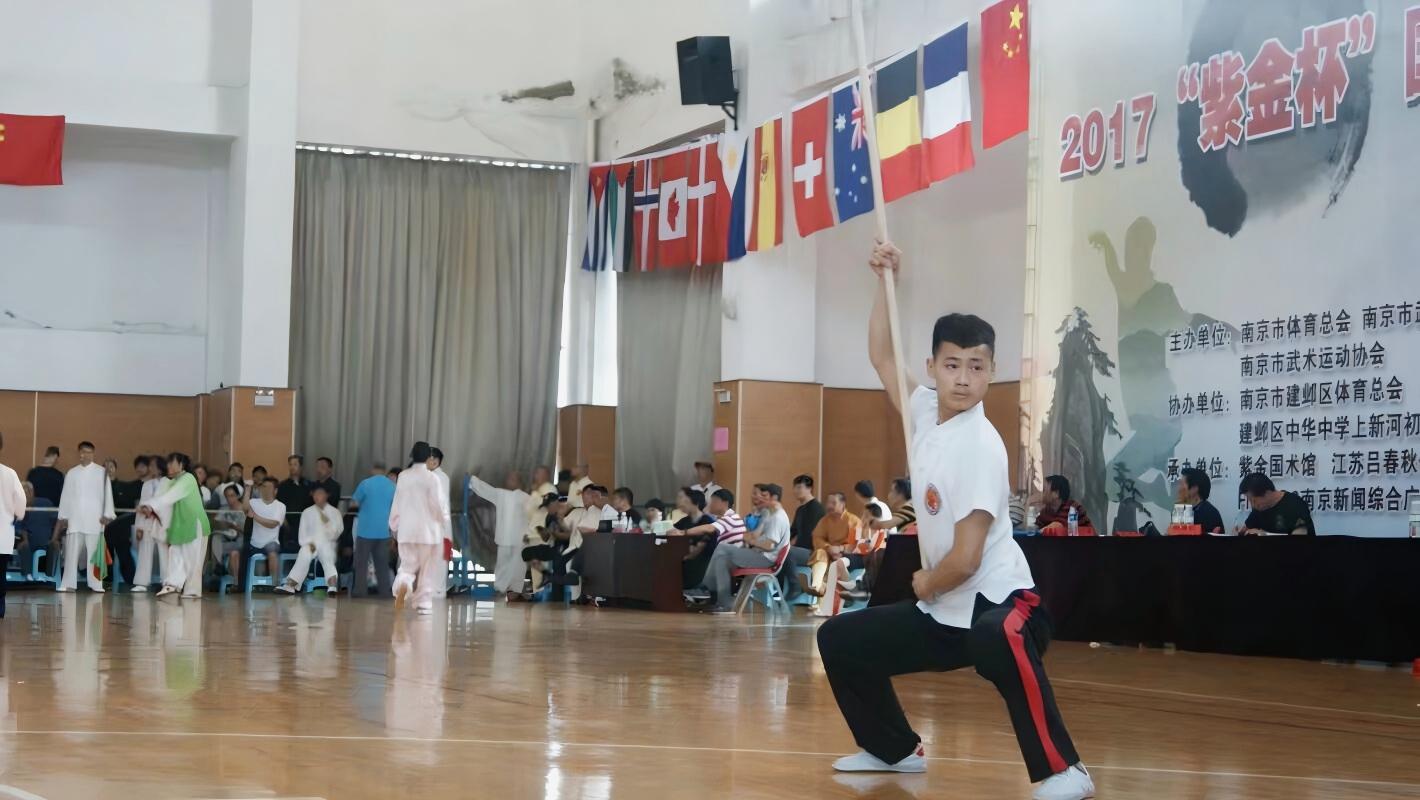
Shaolin Staff Techniques
Practice Shaolin staff techniques to improve coordination and physical fitness, experiencing the traditional cold weapon martial arts culture.
Contact
Detailed Introduction
Shaolin staff techniques are a part of Chinese Shaolin martial artsThe oldest, most core, and most representativeThe techniques of the instruments have long been known as "Shaolin Staff Techniquesthe reputation. In the traditional martial arts system, the staff is known as the "ancestor of all weapons," with basic techniques, wide applicability, and comprehensive offense and defense, serving as the foundational training for all long weapons and short instruments.
Distinct from the sharp and lethal nature of swords and blades, Shaolin staff techniques are simple and robust, broad and expansive, unadorned and practical, with extremely strong combat effectiveness. It integrates ShaolinUnity of Zen and Martial ArtsThe core idea is to train the muscles and bones externally while cultivating Zen meditation and inner character internally. It is both an ancient military combat martial art and the most widely practiced traditional Chinese weapon martial art globally in modern times, making it the most suitable entry point for foreigners.
I. The Origin and Thousand-Year Development History of Shaolin Staff Technique
1. Origin of the Ancient Temple: The Initial Martial Arts for Temple Protection and Self-Defense
The origins of Shaolin staff techniques can be traced back to the founding of the monastery during the Northern Wei Dynasty. Early Shaolin monks, who practiced meditation and sat for long periods, developed simple staff methods using bamboo and wood from the surrounding mountains to strengthen their bodies and protect the temple. This was the earliest prototype of Shaolin staff techniques and laid the foundation for Shaolin martial arts' principle of 'integrating Zen and martial arts, using martial arts to nourish Zen.'
2. Prosperity in the Tang Dynasty: Thirteen Stick Monks Save the Tang King
The Tang Dynasty was a key period for the rise of Shaolin staff techniques, with the classic tale of the 'Thirteen Staff Monks Saving the Tang Emperor' being passed down through the ages. These thirteen Shaolin warrior monks, relying on their exquisite staff skills, rushed to aid in battle, breaking the siege and rescuing their lord, which officially made Shaolin staff techniques famous throughout the world. From then on, Shaolin staff techniques were no longer just a self-defense method within the monastery, but became a widely recognized orthodox combat martial art.
3. Ming Dynasty Zenith: The Peak and Finalization of Chinese Staff Techniques
The Ming Dynasty was the peak and mature period of Shaolin staff techniques, with the technical system thoroughly perfected and standardized. The famous anti-Japanese generalYu Dayou, Qi JiguangHighly praised Shaolin staff techniques, incorporating them into the military combat system, evaluating their pure techniques, efficient offense and defense, and suitability for the battlefield. Ming Dynasty martial arts classics detailed Shaolin staff postures and mental methods, making Shaolin staff techniques the nationally recognized top combat staff art, influencing the development of martial arts for centuries thereafter.
4. Modern Heritage: The Intangible Cultural Heritage Martial Art That Has Swept the Globe
Since modern times, Shaolin staff techniques have shed their battlefield killing attributes while preserving their pure technical core, becoming a standardized and widely popularized traditional martial arts discipline. As a core branch of Shaolin Kung Fu, a national-level intangible cultural heritage, Shaolin staff techniques have spread to over a hundred countries worldwide. They are the most intuitive and classic representative technique for overseas learners to understand Chinese martial arts.
II. Core Culture of Shaolin Staff Techniques: Unity of Zen and Martial Arts, Cultivating the Mind through the Staff
1. Ancestor of All Weapons: Foundation of All Armaments
The martial arts community universally acknowledges that 'the staff is the ancestor of all weapons.' The techniques of all long weapons, including spears, long sabers, and large poles, originate from the fundamentals of staff techniques. Staff practice develops body movement, footwork, wrist strength, waist power, and a sense of offensive and defensive distance. Mastering Shaolin staff techniques allows for rapid integration and mastery of most traditional weapon techniques, making it the optimal choice for beginning martial arts weaponry training.
2. Shaolin Core: The Martial Philosophy of Unity of Zen and Martial Arts
The core that distinguishes Shaolin staff techniques from ordinary folk staff methods lies inUnity of Zen and Martial Arts. Externally, it features fierce and powerful staff movements with wide, expansive techniques. Internally, it involves cultivating a Zen mind of tranquility, focus, and stability. Staff practice does not pursue brute force and killing; it emphasizes 'firmness without violence, power without rashness, seeking stillness within movement, and cultivating virtue through martial arts.' It hones temperament and develops concentration through movement, forming a complete martial arts system that cultivates both body and mind.
III. Mainstream Implement Forms and Classifications of Shaolin Staff Techniques
1. Eyebrow Staff (Shaolin Core Main Staff)
The eyebrow-high staff is the most classic and widely practiced weapon in Shaolin staff techniques, becauseStanding tall to eyebrow heightNamed for its straight and uniform body, moderate length, and balanced weight, it is suitable for all basic moves and routine practice, offering flexibility in advance and retreat and balance in attack and defense. It is the preferred weapon for beginners and overseas students to start learning Shaolin staff techniques.
2. Long and short sticks, nunchaku, and shaozi sticks
- Long StaffLonger in size, with a greater attack range, focusing on sweeping suppression and large-scale offense and defense, with a magnificent momentum
- Short StaffCompact and flexible, portable and easy to use, focusing on close-range quick strikes and close-quarters defense, suitable for self-defense and personal protection
- Shaakujō StaffCombining long and short, soft and hard, with ever-changing moves and unpredictable feints, advanced special skills and techniques
IV. Basic Techniques and Classic Routines of Shaolin Staff Art
1. Eight Core Fundamental Staff Techniques
All complex routines of Shaolin staff techniques are derived from the eight basic staff stances, with moves that are concise, practical, free of flashy redundancy, and highly efficient in actual combat:
- Chop:Top-down, forceful and solid, focusing on suppressing breakthroughs
- Sweep:Horizontal sweeping, wide coverage, focusing on large-range attack, defense, and field control
- Thrust:Straight-line forward charge, precise and swift, focusing on piercing direct strikes
- Lift:Bottom-up, leveraging force to overcome, focusing on deflecting force and counterattacks
- Flick:Close-range rotation, alternating between real and feigned, focusing on close-quarters variable techniques
- Block:Blocking defense, firmly holding the line, focusing on defense and force dissipation
- Deflect:Light and skillful redirection, altering force, focusing on overcoming force with skill
- Support:Overhead protection, comprehensive defense, focusing on high-altitude defense
2. Classic Universal Forms
The Shaolin staff system is complete and clearly structured, suitable for beginners with no foundation to advanced practitioners. The classic routine with the widest overseas dissemination:
- Basic Shaolin Staff:Essential for beginners, standardizing body posture and staff techniques, solidifying foundational skills
- Shaolin Eyebrow Staff:The most classic and mainstream routine, with coherent moves and balanced offense and defense
- Shaolin Coiling Dragon Staff:Involving wrapping and rotating movements, rich in variations, combining both aesthetic appeal and practical combat effectiveness
- Shaolin Heaven-Reaching Staff:Characterized by expansive movements and imposing momentum, focusing on powerful force generation and whole-body integrated power
V. The Martial Arts Style and Core Characteristics of Shaolin Staff
1. Overall Style: Simple and robust, with expansive movements
Shaolin staff art discards flashy performance moves; its core characteristics areSimple, direct, fierce, and highly efficient.The movements are expansive and elegant, with controlled advance and retreat. The staff techniques are crisp and clean, with power delivered through the entire body. It emphasizes the principle of 'the staff strikes a wide area,' providing broad offensive and defensive coverage and strong suppression. It combines a sense of power with coordination.
2. Core Advantages: Easy to Learn, High Fault Tolerance
Compared to complex weapons like swords, sabers, or whips, Shaolin staff has an extremely low barrier to entry. It requires no strict physical prerequisites and no complex power-generation logic. The moves are intuitive and easy to understand, and practice is highly safe. Beginners with zero foundation, including international students, can quickly get started. It is the traditional Chinese martial arts weapon most suitable for international promotion.
VI. The Three Core Values of Shaolin Staff: Self-Defense, Physical Fitness, Mental Cultivation
1. Practical Self-Defense: Versatile and Efficient, Suitable for Daily Self-Protection
The Shaolin staff offensive and defensive system is comprehensive, covering both long and short ranges with flexible advance and retreat. It allows for long-range suppression, close-quarters counterattacks, and all-around defense. It does not rely on innate strength but on body movement, staff momentum, and rhythm to prevail. It is suitable for practice by men, women, and people of all ages, making it an excellent choice for daily self-defense and weapon-based self-protection.
2. Physical Fitness: Loosens Tendons and Activates Meridians, Trains Whole-Body Coordination
Practicing staff techniques requires the full coordination of hands, eyes, body, steps, waist, and strength. Long-term practice can stretch the muscles and bones, unblock the meridians, enhance limb coordination, explosive power, and the body's reaction speed. It effectively improves sub-health issues such as fatigue from prolonged sitting, loose posture, stiff limbs, and insufficient concentration, making it a traditional exercise that combines movement and stillness with excellent body-strengthening effects.
3. Cultivating the Body and Mind: Zen Martial Arts Calm the Mind, Forging Willpower
Shaolin staff techniques emphasize seeking stillness in movement and cultivating the mind during practice. The entire routine requires high concentration and the unity of mind and spirit. Long-term persistence can eliminate restlessness, temper patience, enhance self-discipline and stress resistance, cultivate a calm, resolute, upright, and peaceful state of mind, achieving a dual improvement in both physical strength and mental cultivation.
VII. Who is Shaolin Staff Technique Suitable For?
- Martial arts beginners, overseas entry-level students:Simple movements, clear logic, safe and easy to learn, zero-barrier entry
- Martial Arts Weapon Enthusiasts:The staff is the ancestor of all weapons, which can lay a solid foundation for all weapon-based martial arts
- People with weak constitutions, those who lack exercise:Comprehensive training of physical fitness, posture, and coordination
- For those seeking practical self-defense, simple yet effective techniques:Highly practical, no flashy moves
- For those who appreciate traditional Shaolin culture and national-style martial arts:Orthodox classics with profound cultural heritage
VIII. Shaolin Staff Technique: Beginner Essentials and Practice Taboos
1. Beginner's Core Essentials
Core mantra for Shaolin Staff beginners:Stability before speed, form before power, defense before attackNovices should prioritize standardizing stance, grip technique, and basic staff trajectory, maintaining an upright posture, natural breathing, and fluid movements. After mastering the basic framework, gradually increase speed, power penetration, and the smoothness of technique transitions, advancing step-by-step in a steady progression.
2. Daily Practice Precautions
- Practice in an open, flat area, away from crowds and hard objects, to ensure safety during training.
- Beginners should prioritize using lightweight training staffs, switching to standard equipment only after becoming proficient.
- Avoid using brute force, stiff movements, or overexertion to prevent strains in the waist, shoulders, or wrists.
- Maintain focus, steady rhythm, and composure during practice—avoid impatience or panic.
- Consistent daily short practice sessions to solidify the foundation are superior to single high-intensity workouts.
IX. The Contemporary Value and International Influence of Shaolin Staff Technique
As a signature skill of Shaolin martial arts and a core symbol of Chinese traditional martial arts, Shaolin staff technique is one of the most globally recognized Chinese martial arts weapons. It has shed its traditional religious and military attributes to become an integrated...Fitness exercise, self-defense, cultural experience, mental cultivationA modern health and wellness martial arts project that integrates all these elements.
With its advantages of easy entry, safety and practicality, significant physical strengthening effects, and profound cultural heritage, Shaolin staff techniques have become popular across the globe, including in Europe, America, Southeast Asia, and Australia. They are the most mainstream traditional martial arts experience courses offered in overseas martial arts schools, Confucius Institutes, and Chinese cultural centers, serving as an important vehicle for spreading Eastern martial arts culture and Shaolin Zen-martial wisdom.
The staff is the ancestor of all weapons, and Shaolin is the origin of martial arts. Shaolin staff techniques lack the sharp flamboyance of swords and blades, yet possess the most pure, unadorned, upright, and majestic martial power. Every move and form carries the inheritance and accumulation of a thousand years of Shaolin; each chop and sweep embodies the wisdom of hardness and softness in Eastern martial arts.
Practicing Shaolin staff techniques trains the strength of muscles and bones, self-defense skills, cultivates a steady temperament, and a disciplined character. This classic martial art, passed down for thousands of years, showcases the Eastern charm of Chinese martial arts—'simplicity in pursuit of truth, martial arts as a carrier of virtue, and the unity of Zen and martial arts'—to the world through its simplest moves and most solid core.